Fascinating mountains carved out of lava, beaches of sugar-white sand or black rocks, villages perched on ridges, imposing pine forests shrouded in mist, exciting hikes and finally many sun-kissed resorts: the Canary Islands, (very) far off the coast of Spain, are one of the most popular destinations in Europe.
The theme of diversity and inclusion is one of the central topics of Best in Travel 2021, in which we have engaged and enjoyed profiling what will be the tourism trends in the year to come, as is the case in El Hierro, Canary Islandsan oasis with an environmentalist soul that conquers travellers of all ages and tastes.
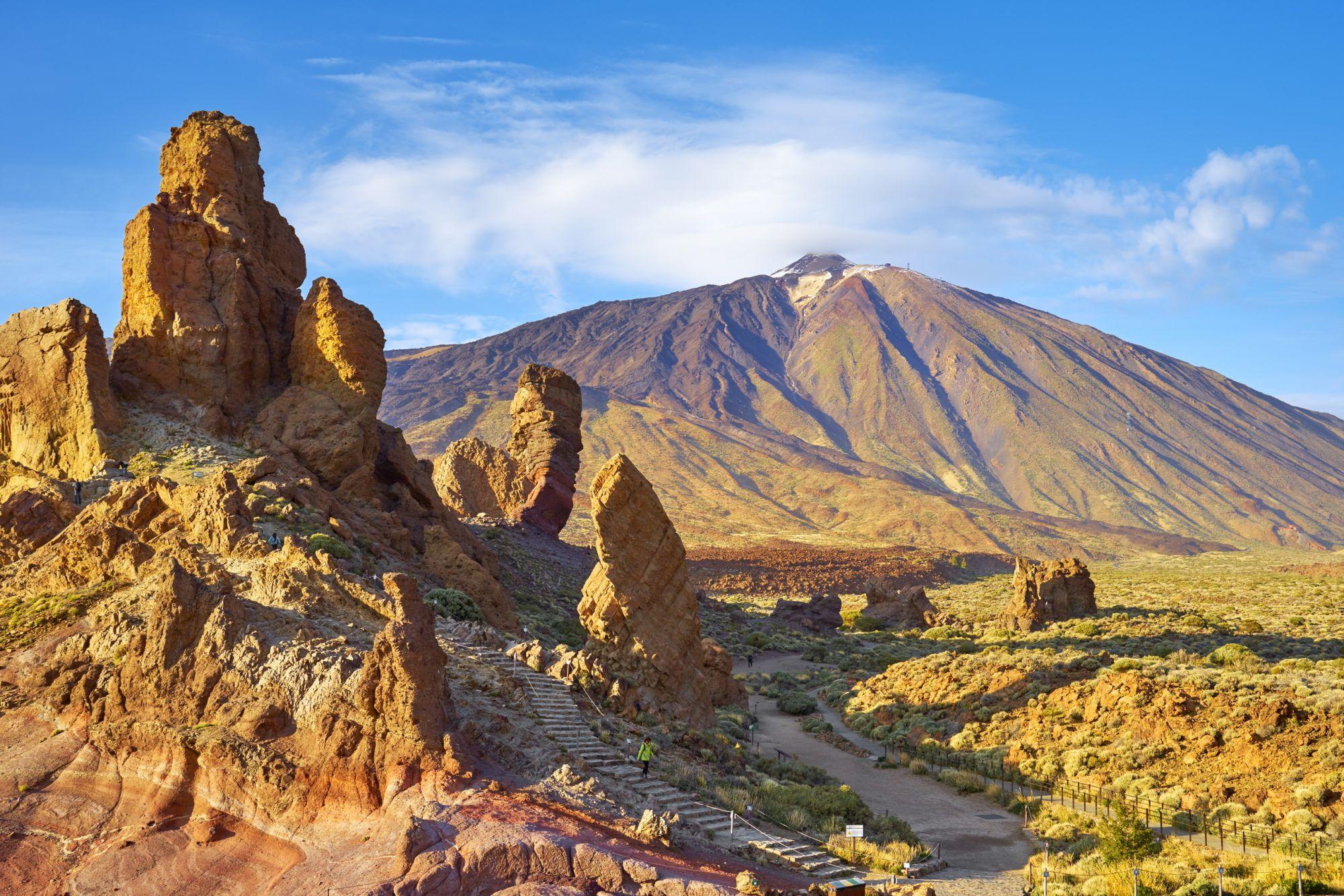
Teide National Park. In the background, the volcano after which it is named © John_Walker / Shutterstock
Many travellers fall in love with las Canarias to the point that they return year after year, exploring a different island each time. But... Which one do you start with? Eight islands make up the Canary Archipelago (100 to 400km from the Atlantic coast of Morocco) and each one has a different charm, character and appearance. Here is our guide to finding the Canary Island that best suits your travelling style.
Recommended guides and products:

Travel guide
Canary Islands
Tenerife: mountains, trekking and food
Tenerife is a favourite island for older travellers, not only because of the British-loved holiday resorts scattered throughout the southern islands, but also because it is home to Spain's highest and most extraordinary peak, El Teide, 3817m. Combined with the surreal scenery of the 190km² Parque Nacional del Teide, this spectacular volcanic moonscape offers one of the country's most exciting treks. Only 200 hikers per day can access the five-hour ascent to the summit: book in advance (online). The island offers many equally breathtaking routes that pass through intriguing villages, fragrant Canarian pine forests or vertiginous valleys, such as El Barranco del Infierno (6.5 km).
Not to mention the thriving and increasingly sophisticated local gastronomic scene. Tenerife is the only island with starred restaurants, six at the last count. A few examples: the Basque-inspired haute cuisine of MB, Martín Berasategui's two Michelin-starred restaurant, or the sensational fish dishes of the Padrón brothers, at El Rincón de Juan Carlos.
Where to stay, where to eat
The Hotel Alhambra is housed in a refined palace in La Orotava, a town full of art dating back to the 18th century. The capital, Santa Cruz de Tenerife, is home to a vast array of incredible restaurants. Experience the creativity of Guannabí, Mediterranean fusion dishes served in an old Canarian house.

Overview of Las Palmas de Gran Canaria © Tomasz Czajkowski / Shutterstock
Gran Canaria: mountains, history and food
The most famous of the archipelago, often the subject of malice, Gran Canaria turns out to be unlike any other island, as diverse as its delicious cuisine. Mist-shrouded mountain ranges give way to desert expanses, lush laurel and pine forests (and yes, even a few crowded tourist resorts) while the Cueva Pintada Archaeological Park in Gáldar evokes mysterious images of the archipelago's original inhabitants, the pre-Hispanic civilisation of the Guanches. Drive through the hairpin bends leading to the centre of the island, whose beauty and drama culminate in the enchanting cave-home village of Artenara. Then stock up on creamy queso de fl or (flower cheese) and other local specialities at the farmers' market. Finally, admire the unmistakable Canarian architecture in the bustling capital, Las Palmas de Gran Canaria, the ninth largest city in Spain.
Where to stay, where to eat
Las Palmas' cultural heritage can be seen in the stunning 1920s Downtown House and the unforgettable 'eco-fusion' cuisine of Llévame al Huerto.
Sign up for our newsletter! For you weekly travel tips, special offers, stories from around the world and 30% discount on your first order.

Lanzarote offers a landscape of a thousand shades © Oleg Znamenskiy / Shutterstock
Lanzarote: scenery, art and architecture
Lanzarote looks like a huge canvas of changing natural hues: an enchanting concentration of ominous volcanic cones, shimmering black rock beaches, angry waves and expanses of palm trees. It is no surprise that the island is deeply associated with 20th century artist and environmental advocate, César Manrique. His work has influenced every corner of the island, visible in the white houses with blue windows in coastal villages such as La Caleta de Famara, Arrieta and El Golfo, or in the inimitable lava rock dwellings at the Fundación César Manrique. At the heart of the island lies the 51km² Parque Nacional de Timanfaya: take the 9km trail through this volcanic, almost Martian landscape to the summit of Caldera Blanca.
Where to stay, where to eat
La Buenavista Lanzarote offers eco-friendly country-style suites amidst the unique volcanic scenery of Lanzarote's vineyards. The international restaurant La Cantina, in Teguise, is a popular location.

El Cofete is one of the most stunning beaches in Fuerteventura © lunamarina / Shutterstock
Fuerteventura: beaches and water sports
Proclaimed a UNESCO Biosphere Reserve in 2009, the second largest island in the archipelago after Tenerife attracts visitors with its beautiful beaches, perennially sunny climate and wild Martian beauty. Windswept and evocatively arid, Fuerteventura boasts the Canaries' most idyllic beaches: the honey-coloured dunes of the Parque Natural de Corralejo, El Cotillo, formerly a fishing village and now a surfers' paradise, and the golden Playa de Cofete, a raw pearl at the island's northern tip. You can surf, windsurf, kitesurf, dive (including free diving) and go sailing. The hiking trails are fabulous, especially in the nature reserve on Isla de Lobos.
Where to stay, where to eat
The Avanti, in Corralejo, is a minimal chic hotel with a refined, grown-up style. The Restaurante Avenida serves traditional Canarian dishes.

Trekking through the nature of La Palma © Blyjak / Getty Images
La Palma: nature and trekking
It is impossible not to fall in love with the natural wonders of La Palma, an island still little visited by tourists and overflowing with silent pine forests and green hills. The capital, Santa Cruz de la Palma, is an architectural gem full of elegant 16th century residences. Approximately 850km of walking routes branch out across the island, the most exciting of which traverses the 47km² of the Parque Nacional de la Caldera de Taburiente, furrowed by an 8km diameter fissure caused by the collapse of a volcano. The route continues for 11.4km, touching the 1854m high peak of Pico de Bejenado, a stretch dotted with pine trees, sharp ridges and mysterious rock carvings.
Where to stay, where to eat
The beamed ceilings of the Hotel San Telmo in Santa Cruz crown its splendid rooms. Reserve a table in advance at the Enriclai restaurant, also adored by locals, to enjoy its fresh produce.
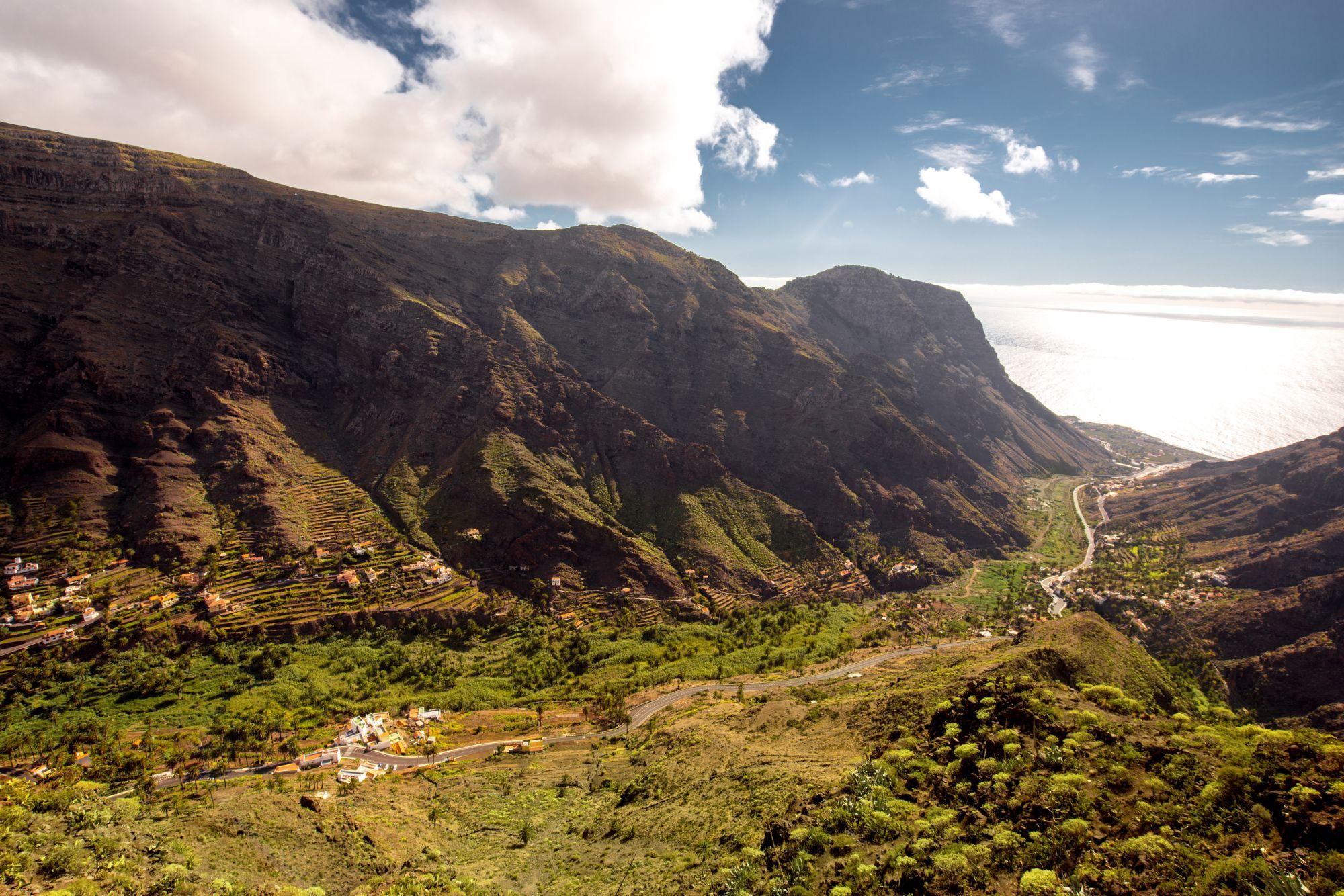
Valle Gran Rey in La Gomera © RossHelen / Shutterstock
La Gomera: hiking
La Gomera is a trekking enthusiast's paradise, with routes that descend from the 1487m high windswept peak of Alto de Garajonay along lush hillsides and steep valleys. The Parque Nacional de Garajonay is an enchanted place occupying 40km² in the heart of the island, with treks that explore ancient laurisilva forests (try the 10.5km Alto-Hermigua trail) and sheer valleys, or stretch to the volcanic coastline. To tire out your legs, stroll through the pastel streets of the capital San Sebastián de la Gomera and refresh yourself with generous portions of local specialities, such as potaje de berros (watercress stew), miel de palma and goat cheese.
Where to stay, where to eat
The best hotel on the island is the Parador de la Gomera, in the style of the old 15th century Canarian palaces. Not to be missed is the homemade cuisine of the popular restaurant Casa Efigenia.
El Hierro: diving, trekking and peace
Those who venture to the westernmost island of the archipelago immediately recognise that they have reached a rather special destination. Surrounded by sparkling natural pools and impenetrable volcanoes, El Hierro was classified as a Biosphere Heritage Site by Unesco in 2014 and is set to become the world's first energy self-sufficient island. The feeling is that of being at the edge of the world. Quiet trekking routes, such as the historic Camino de la Virgen (27km) wind through fields of flowers and intoxicating pine forests. Other trails, such as the vertiginous 4.4 km Camino de Jinama, traverse sheer cliffs overlooking the lava landscape. While off El Hierro, the warm, crystal-clear waters of the Atlantic offer the best diving location in the Canaries, especially to the south, near La Restinga, where the Mar de las Calmas is located.
Where to stay, where to eat
Stay at the bodega El Sitio, a rustic yet chic accommodation that also offers yoga classes, and dine at the elegant Restaurante Mirador de la Peña, designed by César Manrique.

Fishermen's boats in La Graciosa, Lanzarote in the background © anyaivanova / Shutterstock
Isla Graciosa: beaches and back to basics
Officially becoming the eighth of the Canary Islands in 2018, La Graciosa is a paradise of sandy beaches just a half-hour ferry ride from Lanzarote. Golden sand surrounds the volcanic cones, providing unforgettable scenery. The only way to explore it is on foot, by bicycle or by hiring a jeep. Many visitors stay from morning to night coming from Órzola, Lanzarote, but if you decide to spend a couple of nights in La Graciosa you can escape from the tourism and bustle of the other islands. Walk or cycle to the remote Playa de las Conchas or the isolated Playa Francesa, before indulging in some well-deserved rest and a fish feast in the humble 'capital' of Caleta de Sebo.
Where to stay, where to eat
Pensión Enriqueta in Caleta de Sebo offers great service, no-frills rooms and a nice restaurant.