For many people, the greatest attraction of the Maldives remains the famous luxury resorts, but there are always two sides to a medal or, in this case, a ciprea shell. Combining a stay in a resort, with all its comforts, with a cultural experience on one of the archipelago's dozens of inhabited islands can enrich a trip to the Maldives in an extraordinary way.
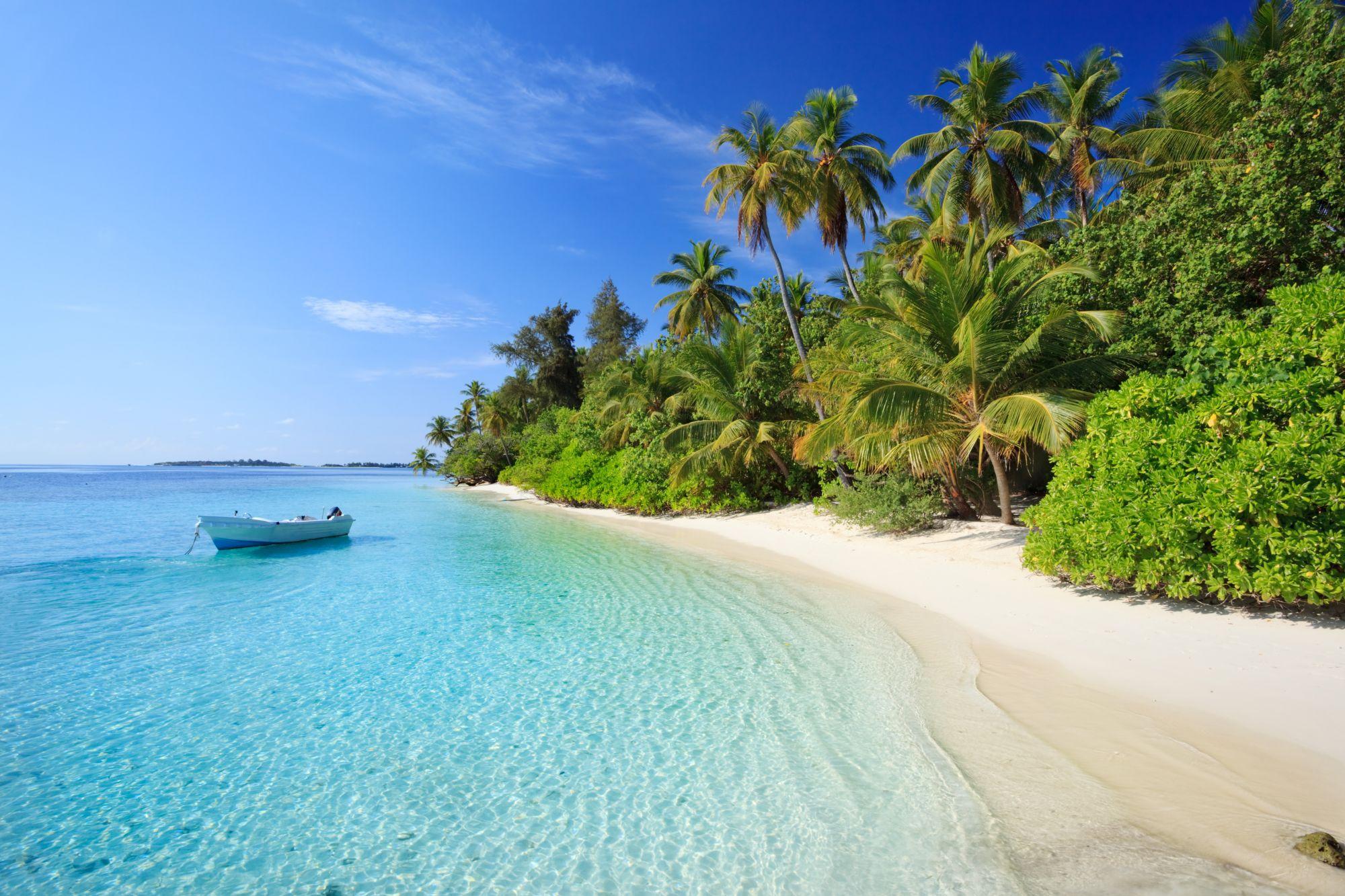
A classic island paradise: a day like any other in the Maldives © Matteo Colombo / Getty Images
Where to find the Maldives
About 1800 years ago, Arab merchants gave the Maldives a nickname that still holds true today: the 'Money Islands'. At that time, the ciprea shells (boli) in which the archipelago was rich were an important international currency, and today these paradise islands have turned into a favourite holiday destination for wealthy people.
Nicknames aside, the etymology of the word 'Maldives' refers to the particular geography of the archipelago. The 'garland islands' are, in fact, arranged like a necklace in the Indian Ocean, as if suspended below the drop ear of Sri Lanka, south of India. And this treasure is created from only the most beautiful materials: turquoise-edged white and golden sands, waters as clear as diamonds and luminous sunsets framed by palm trees. Every second spent here is a dreamlike experience.

A rostral stenella plays in the waves © Pete Atkinson / Getty Images
Where to go
As the country with the lowest altitude in the world, the Maldives is at the forefront of climate change. This makes its natural beauty all the more precious, especially the wildlife sightings. Fans of snorkelling, scuba diving and animals in general should set their sights on the southernmost atoll, Addu (also called Seenu), where you can see rostral stenellas, sea turtles, whale sharks and white terns, a seabird found nowhere else in the archipelago.

A guest house on the island of Kuda Huraa, Maldives ©Markeliz/Shutterstock
Addu
Addu is also home to some of the newest or most unique features of the Maldives: a nine-hole golf course overlooking the lagoon, one of the longest roads in the archipelago (16 kilometres, ideal for cycling) and the nation's highest 'mountain', towering five metres above the island of Villingili.
Staying in a luxury resort where you can be pampered around the clock is certainly an important component of a trip to the Maldives, but spa treatments and five-star dining are not everything. To really get a feel for local life, you have to visit one of the officially declared inhabited islands, on which most of the archipelago's 345,000 inhabitants reside. Until 2009, government restrictions were in place requiring visitors to apply for a permit to explore or stay on islands not occupied by resorts. Today, however, many inhabited islands are open for day trips or even overnight stays, and the staff of the resorts must by law be 50 per cent locals. This means that the culture of the islands is now much more accessible to visitors.
After enjoying the luxuries of the Shangri-La Villingili Resort & Spa in the southern atoll of Addu, I took part in a bike tour led by local guide Azmy to Addu City - the sequence of peaceful inhabited islands located just beyond the lagoon of my beautiful resort - for a quiet introduction to the 'real' Maldives. This 'city' is pervaded by a calm island vibe (so close to the equator the pace is perforce slowed), but the politically themed street art, numerous mosques, bustling teashops and welcoming smiles of the people unexpectedly reveal a very vibrant community.
'We don't lock our doors here, we all know each other,' Azmy explained to me, smiling as we parked our bikes outside his family's house. I had been invited to see - and try - theundholi, the traditional Maldivian rocking chair found in almost every home on the atolls. Azmy's wife and mother-in-law seemed puzzled by my enthusiasm and desire to try out the beautiful wooden swing in their living room, but they kindly indulged me. And the experience lived up to expectations.
The people of Addu generally speak very good English, as between the 1940s and 1970s the British ran several military bases on the island of Gan. Azmy's grandfather worked at the base as a cook, while her father, a local councillor, hopes one day to open a military museum to tell the story of the base, which was considered a tough assignment for British pilots due to its remote and isolated location.
But even without a museum, many interesting historical testimonies can be discovered. Biking around, we saw a disused post office covered in moss, poppy-filled memorials, a retro-looking cinema (still occasionally used) and a creepy quarantine centre for people suffering from elephantiasis, a mosquito-borne disease that was only officially eradicated in 2016. Needless to say, I declined the invitation to see the centre more closely.
Today, the RAF barracks are part of Equator Village, one of the many budget resorts opening across the archipelago, and the airstrip is used by commercial flights instead of bombers. The first international passenger flights, from Colombo, landed at Gan Airport in late 2016. As tourism is expected to boom in the southern atolls, now is the right time to go there, before they become too crowded.
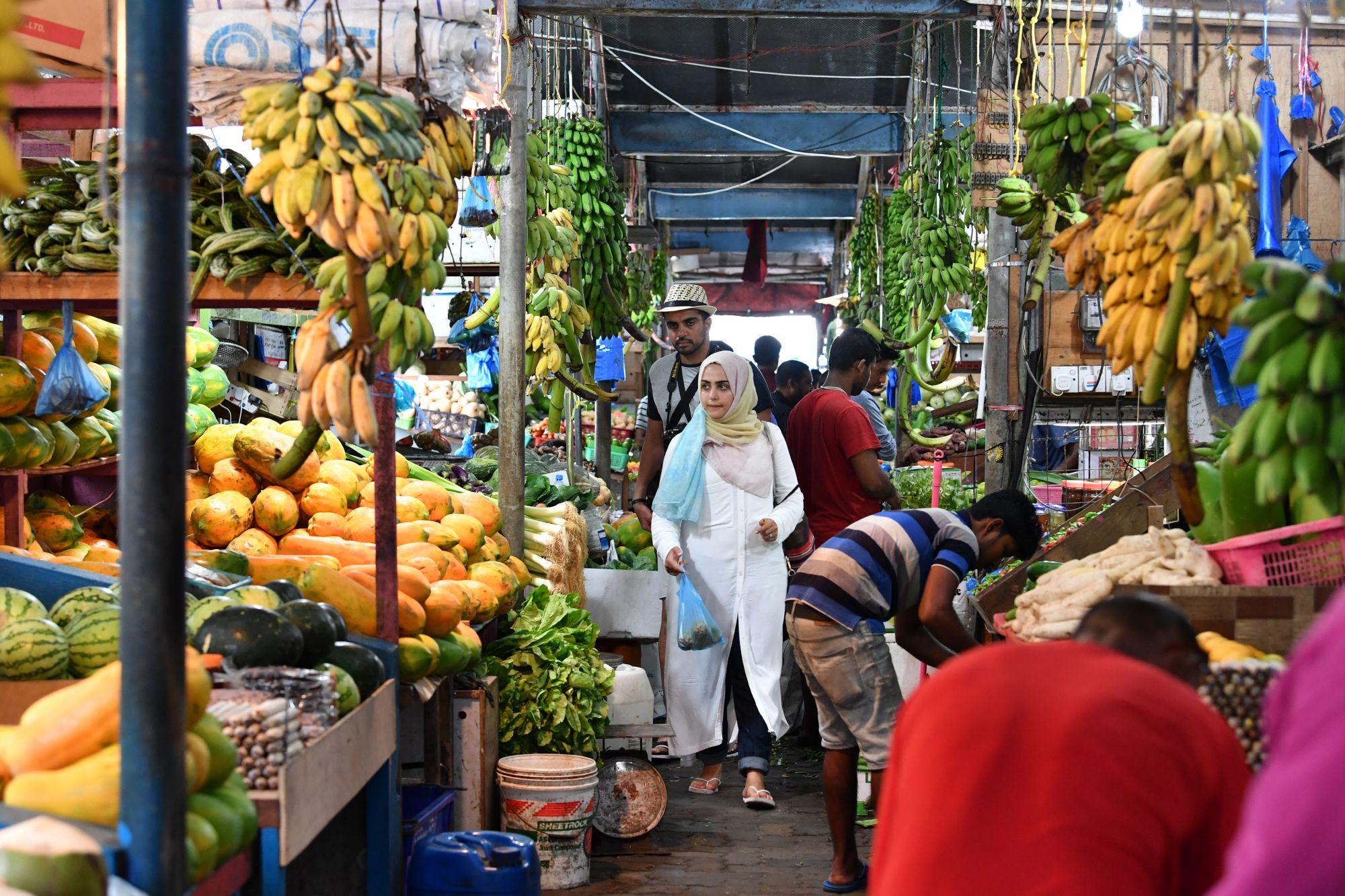
The local market in Malé. ©Andrea Izzotti/Shutterstock
Subscribe to our newsletter! For you weekly travel tips, special offers, stories from around the world and 30% discount on your first order.
Malé
If island life is quintessentially Maldivian, the capital, Malé, remains the main transport hub and is definitely worth a stop to see its miniature version of life in the 'big city'. Although it has an area of only 5.8 square kilometres, compared to the more remote islands this densely populated dot in the ocean has a distinctly cosmopolitan feel. Residents often split their time between two jobs, commuting by moped through traffic-clogged streets in the shadow of the tall buildings housing banks and offices. The markets are bustling, the asphalt sizzles, the call to prayer echoes through the city noise.
If you only have time to do one thing in Malé, go and see the Old Friday Mosque. Built of coral stone in 1656, its walls are elaborately decorated and - just like the corals you see in the ocean - rough to the touch. The worn tombstones in the cemetery (the pointed ones are for men, the curved ones for women) are slanted and almost look like a crowd of spectators competing to see the timeless elegance of the mosque. The simple tomb of Abdul Barakat Yoosuf Al Barbary, the man credited with converting the Maldives from Buddhism to Islam in the 12th century, lies across the street.
Walking in the tropical sun makes one hungry, and even those who go to the spa or sunbathing have to eat. The territory of the Maldives includes 90,000 square kilometres of ocean, so it is not surprising that fish is the most popular food - tuna, in particular, takes the lion's share. Taste this tasty fish in mas huni, a breakfast dish of tuna, onion, coconut and chilli peppers eaten with flatbread called roti. Tuna is also the main ingredient in many spicy 'short eats' - popular fried snacks - and in the tuna curry that locals enthusiastically consume at every meal.
Many resorts and tour operators offer fishing trips that provide an opportunity to witness the traditional pole-and-line technique still used by Maldivian fishermen, as well as to try your hand at catching big game fish. Alternatively, head to the Malé Food and Fish Market, where you can see the day's catch and hunt for souvenirs. If fish fries, smoked tuna or tuna paste don't suit your taste, you can opt for a sweet alternative, the 'bounty', a tasty local snack made of coconut, sugar and honey.
First time in the Maldives
Will it be your first time in the Maldives? Then:
- Planning the trip well essential: the Maldives are not exactly around the corner from Italy.
- Equally essential is choosing the right resort, because there really are resorts for all tastes and each one lends itself to a different type of trip: honeymoon, diving/snorkelling, hiking, family trip.

Fish at the Malé fish market © ©pilesasmiles/Getty Images
When to go and prices
The high season is from December to March. During this period, the highest prices are also recorded, especially between Christmas and New Year. This is also the dry season, i.e. the time of year when there is the least rainfall.
There are two low season periods: April to July and September to November. During these months, prices are much lower but there is also a higher risk of encountering rain and cloudy days.
Documents
Finally, before you leave, don't forget your documents. These are a passport with a residual validity of at least six months and an entry visa, valid for stays of up to thirty days. In addition to these two documents, you will also need to have:
- Booking voucher for hotel services;