'Syracuse is not only a city to live in, but to live in: no other city at the same time that as a city it denies itself, dissimulates itself, becomes secret and visionary; to be discovered' (Leonardo Sciascia).
To visit Syracuse is to take a journey through history, to discover a city thousands of years old that has its origins in the remote past.
Founded by the Corinthians around 734-733 B.C., Syracuse has had a glorious past that echoes in the streets, where you will find numerous monuments and vestiges of ancient splendour.
Syracuse, history and origins
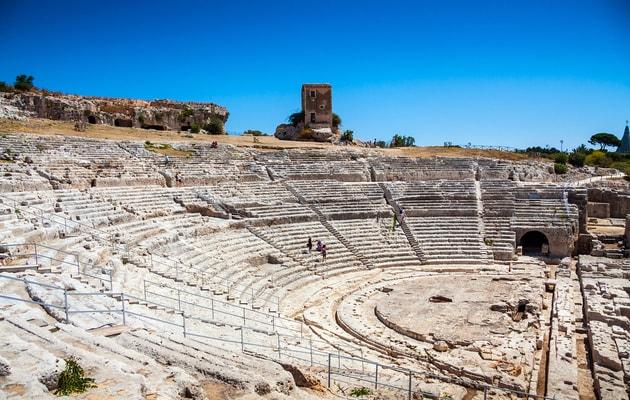
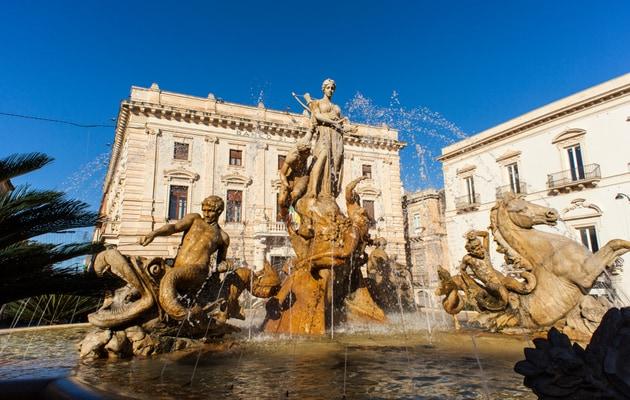
During the period when it belonged to Magna Graecia, Syracuse reached the peak of its splendour: in terms of beauty and importance, it was a rival to Carthage and Athens. According to Cicero, it was in fact the largest and most beautiful of all Greek cities . There are numerous traces of this period in Syracuse, the Fountain of Arethusa, the Greek Theatre, the Ear of Dionysus, the Temple of Apollo, to name but a few. But it was not only the Greeks who passed through, Syracuse was colonised successively by the Romans, Byzantines, Arabs and Normans. A violent earthquake in 1693 reduced the city to rubble, eliminating (or almost eliminating) all architectural traces of the past.
After the tragedy, the city was entirely rebuilt in Baroque style: here you can admire one of the best examples. The impression you get is of visiting a city suspended in time, between the Middle Ages and the Baroque. Here is a guide to what absolutely must see and do in Syracuse.
SEE ALSO: HOLIDAYS 2022
What to see in Syracuse
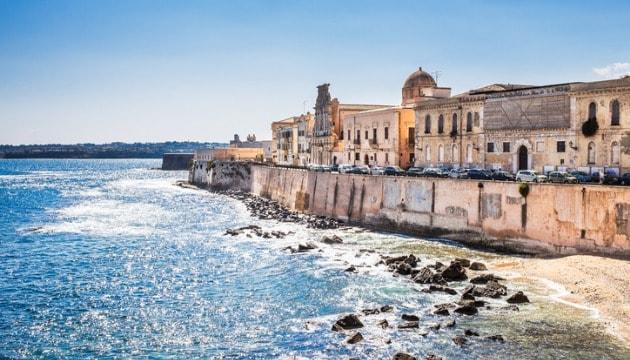
The city is located on the east coast of Sicily, partly on the mainland and partly on the beautiful island of Ortigia, which is why it is also known as the island within an island.
But what is there to see in Syracuse? Certainly the island of Ortigia, the beating heart of the city that preserves important traces of its past. It can be reached by crossing one of the two bridges that join the island to the mainland. Reach Fonte Aretusa, a spring of water that forms a small lake where Europe's only wild papyruses grow.
READ ALSO: SUMMER TRIPS
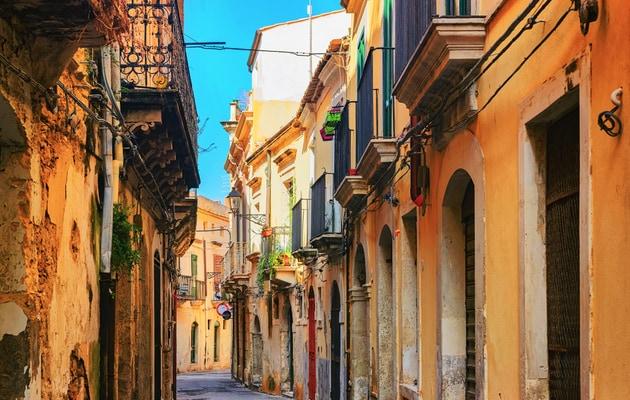
The tour continues through the narrow streets of the historical centre of Ortigia where you will find churches, squares, and Baroque palaces. The Cathedral of Syracuse, which stands where the old temple dedicated to Athena once stood, is one of the most beautiful examples of Sicilian Baroque. It is located in Piazza Duomo, which is a treasure trove of elegant palaces and solemn churches: make a stop to admire Palazzo Vermexio where you should definitely note the small gecko that Vermexio sculpted in the left corner of the building. Also here, pay a visit to the Church of Santa Lucia alla Badia, the church dedicated to the patron saint of Syracuse, which houses Caravaggio's work 'The Burial of St Lucia'.
Stroll along the Alfeo promenade to reach the beautiful Maniace Castle from where you will enjoy a panoramic view of the coast. Also on the island you will find the Temple dedicated to Apollo, the oldest Doric stone temple in Sicily, located in front of Piazza Pancali.
Other buildings to see include Palazzo Bellomo, Palazzo Mergulese Montalto, Palazzo Chiaramonte, the church of San Martino and Palazzo Gargallo.

Cross the bridge and reach the Neapolis Archaeological Park, here you can visit the Greek Theatre, the Latomia del Paradiso (under the theatre) where you will find the curious Orecchio di Dionisio (Ear of Dionysus), a huge rock with a curious acoustic effect. You will also find the Ara of Hieron and the Roman Amphitheatre. Stop for a visit at the ruins of the Church of San Giovanni alle Catacombe. One side of the church leads to the Catacombs of San Giovanni, the only ones in the city open to the public.
Let us not forget that the city is the birthplace of Archimedes, you will realise this from the statues and the square dedicated to him. What you absolutely must see, however, is the Archimedes Technopark where you will find an immense play area with reproductions of the machines and inventions of the great genius.
Don't miss a visit to the Euryalus Castle, the largest castle dating back to Greek times that has survived to the present day. It is located in the hamlet of Belvedere and was carved directly into the rock.
In Syracuse you can visit the Giudecca, where you will find evidence of Jewish Syracuse. It is located in the area bounded by via della Giudecca, via Larga, via Maestranza and via Alagona. Not much is left of the past dwellings but in the basement of the Hotel Alla Giudecca you can visit an ancient miqweh, a system of tanks fed by running water that was once connected to the synagogue. Also on this street, it is worth visiting the Teatro dei Pupi (puppet theatre) at number 17 to watch a traditional performance.
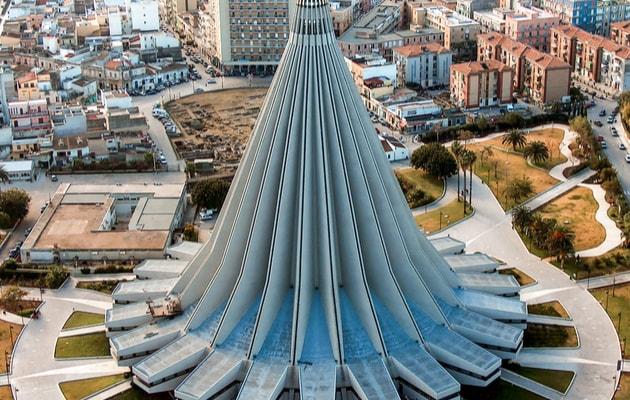
Pay a visit to the Sanctuary of the Madonna delle Lacrime, a tall cone-shaped church housing a plaster effigy depicting the Immaculate Heart of Mary, which wept in 1953.
Not far from Syracuse, visit the Rock Necropolis of Pantalica, an archaeological site dating back to the first half of the 13th century B.C., consisting of more than 5000 rock-cut tombs that has been under UNESCO protection since 2005.
Reach the Vendicari Reserve, one of the most beautiful oases in Europe and covering an area of 15,000 hectares. Walking among junipers, mastic trees and glasswort, you can reach the sea. 13 kilometres of unspoilt coastline are part of the reserve.
If you love nature walks, don't miss a day at the Cavagrande del Cassabile Nature Reserve, where you will find dense forests around a natural canyon. You can check the status of the reserve here.
Here are some tips on what to do in a day, what to do in the evening and what to do with children.
What to see in Syracuse in a day
If you are only passing through Syracuse and only have one day to visit, here is a tour designed for those who are only in town for 24 hours. Your tour begins on the island of Ortigia, where you must visit the Fountain of Arethusa, the Cathedral, the Church of Santa Lucia alla Badia, which houses Caravaggio's work 'The Burial of St Lucia', the Temple of Apollo and Maniace Castle, which closes at 1pm.
Then head to the Neapolis Archaeological Park where the Roman Amphitheatre, the Ara di Ierone, the Greek Theatre, the Latomia del Paradiso, the Grotta dei Cordari and the Orecchio di Dionisio await you. The park opens at 8.30 a.m. and closes at 7.30 p.m. (last admission is at 6 p.m.). The cost of the ticket is 10 euro.

The evening in Syracuse starts with an aperitif on the streets of Ortigia, and then continues in one of the small bars on the Alfeo promenade. Try Kukua Beach or Lido Zen if you want to have an aperitif on the beach.
What to see in Syracuse with children
Syracuse is perfect for a trip with the little ones, fun and educational. Among the most interesting things to do is to visit the Neapolis Archaeological Park and the Archimedes Techno Park, located about 200 metres from the Greek Theatre; here you will find a huge educational park dedicated to the genius of Archimedes.
Near Fonte Aretusa do not miss a visit to the Aquarium of Syracuse, perfect for families, where you can admire the life forms of the Mediterranean, a part dedicated to freshwater fish and a section on tropical sea fish. The Papyrus Museum is also worth a visit (for the uninitiated, Syracuse is the only place after Egypt where papyruses grow wild; you can find them along the banks of the river Ciane). For museum visits http://museodelpapiro.it
12 things to see in Syracuse - Video What to do in Syracuse
Eat Fried pasta with breadcrumbs and anchovies
See The sanctuary of the Madonna with tears
Take a boat trip on the River Ciane
Attend a performance of the Puppet Opera
See the Caravaggio in the Church of Santa Lucia
Visit the Catacombs of San Giovanni
Visit the Technopark of Archimedes
Reaching the Vendicari Reserve
Eat Tuna alla ghiotta
Visiting the "Paolo Orsi" Archaeological Museum
Shopping at the Noto Market
Strolling in the Rione della Graziella
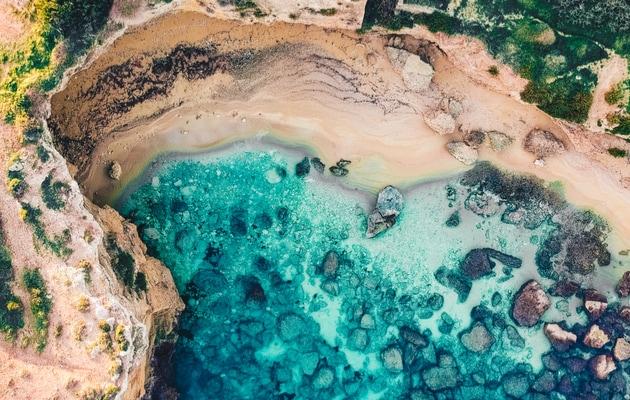
Syracuse sea and most beautiful beaches
Below are the most beautiful beaches in the Province of Syracuse
Beach name | Where to find | Distance from Syracuse |
|---|---|---|
Vendicari Beach | Contrada Vendicari, Noto | 40 km |
San Lorenzo Beach | Noto | 50 km |
White Fountains | Fontane Bianche hamlet | 12 km |
Arenella beach | Arenella district | 10 km |
Avola Beach | Avola | 15 km |
La Gallina beach | Avola | 20 km |
Fanusa Beach | Hamlet of Fanusa | 8 km |
Plemmirio Cliffs | Plemmirio Reserve | 14 km |
Playa Carratois | Portopalo of Capo Passero | 48 km |
Brucoli beach | Augusta | 40 km |
How to get to Syracuse
Catania Airport (bus and car hire)
Syracuse Central Railway Station
Motorway NSA 339 Catania-Siracusa
A18 SR-GELA/Siracusa-Rosolini motorway
Motorway A19 Palermo-Catania + NSA 339 Catania-Siracusa
Port of Catania
Port of Pozzallo (RG)
Weather Syracuse
Syracuse's climate is typical of coastal Mediterranean areas, mild in winter and dry in summer and is known to be characterised by the Sirocco.
The maximum temperatures in the winter months are around 16 °C and in the summer months around 35 °C; while the minimums are 7 °C in winter and 20 °C in summer. If you are about to leave, take a look at the weather in the city.
Surroundings of Syracuse
Cavagrande del Cassibile
Noto
Avola
Marzamemi
Portopalo di Capopassero
Vendicari Reserve
Correnti Island
Pozzallo
Val di Noto
Ragusa
Photos and images Syracuse
Below is a selection of the most beautiful images of Syracuse

(bepsy / Shutterstock)

Map and map Syracuse
Here is a map showing the province of Syracuse. Here are the places to visit on your on-the-road trip to Syracuse and its province. For more information visit Syracuse Tourism.
Italy
Sicily
Syracuse