 Piedmont is one of Italy's most deserving regions, but all too often it is not adequately celebrated and perhaps not given due credit.
Its cities, including Turin, seem to remain off the radar of tourists coming to Italy: most foreigners head for the Rome-Florence-Venice triptych, and Italians themselves prefer the seaside resorts of Sicily, Sardinia and Salento, or the mountainous areas of Trentino.
In reality, this fantastic area has so much to offer, austere elegance, incredible atmosphere, fantastic historical and cultural sites, great food and impressive natural areas. Here we recommend 15 things you absolutely must see in Piedmont.
Save money with the Torino Piemonte Card: the two, three or five-day Torino Piemonte Card allows you to explore the region easily and inexpensively. It offers free entry to museums, monuments, castles and royal residences and discounts for concerts, theatre performances and public transport.
1 - Turin
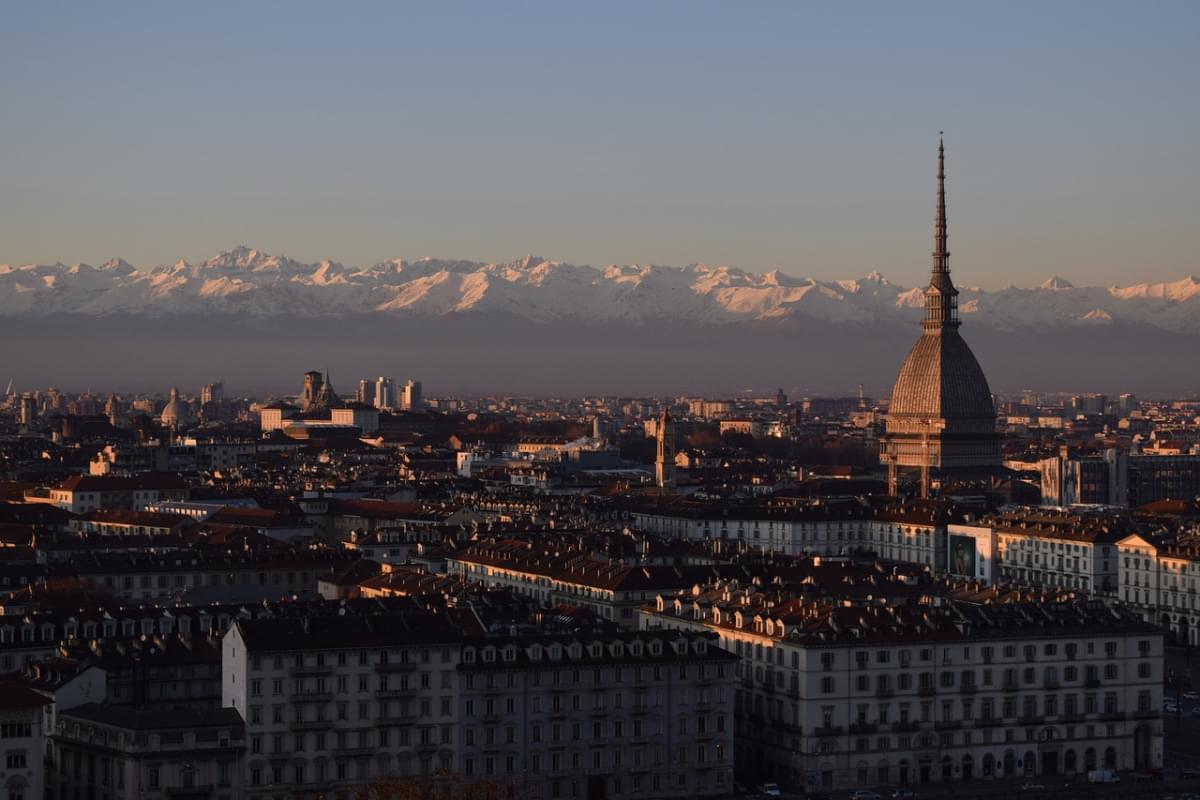
For its artistic beauty and centuries-old history, Turin is one of the most beautiful cities in Piedmont and Italy.
The tree-lined avenues are a feature of Turin and the idea dates back to 1808 to connect the Savoy residences. The oldest are Corso Francia, Corso Vittorio Emanuele and Corso Regina Margherita.
Among the must-sees are the Renaissance-era Duomo, home to the Holy Shroud, the Mole Antonelliana that houses the National Museum of Cinema, the Royal Palace, Palazzo Carignano, Palazzo Madama, and the beautiful Egyptian Museum. Another feature of the city is its monumental arcades, which stretch for over 18 km. Along the banks of the Po is a famous public park, the Valentino Park, which in 2014 was the most popular with tourists in Italy. It is also home to the Castle, a former Savoy residence that has been declared a UNESCO World Heritage Site and now houses the Department of Architecture.
In the streets of the city, take the opportunity to stop at historic cafés, 19th-century establishments where you will feel like you are taking a trip back in time.
SEE ALSO: What to see in Turin
2 - The Royal Palace of Venaria Reale and Stupinigi
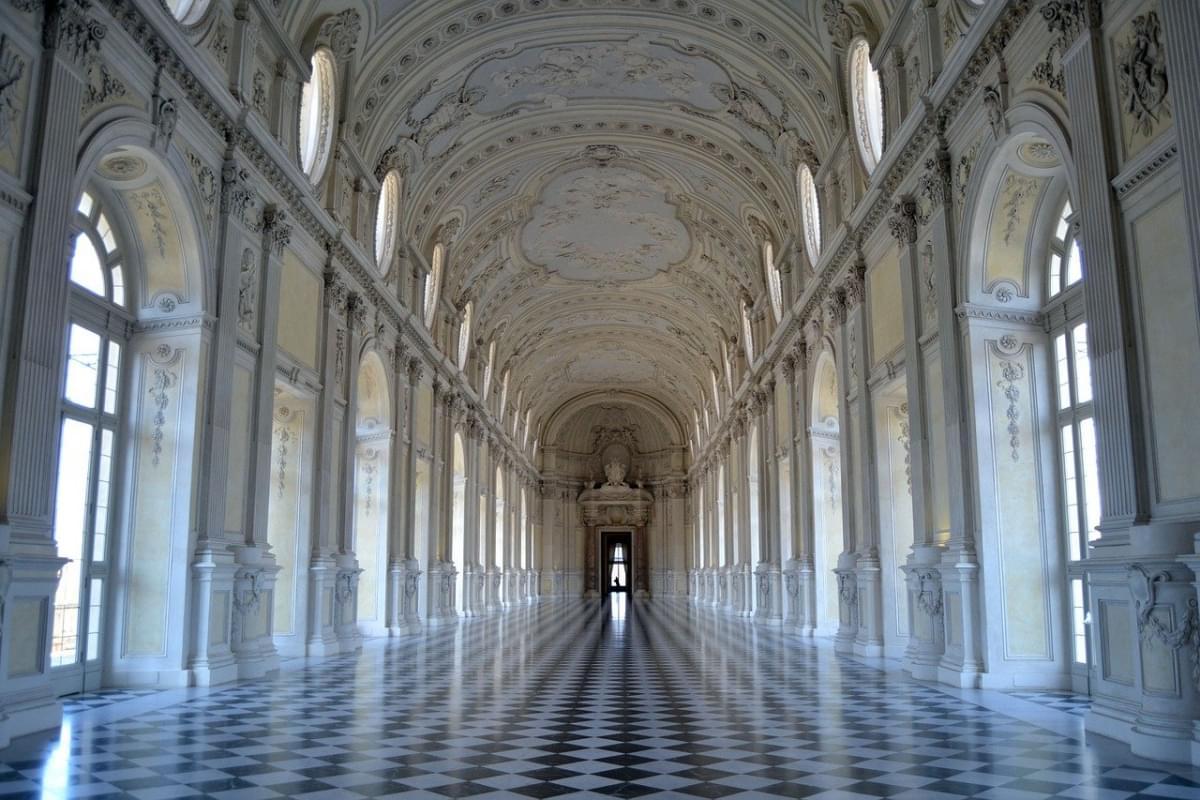 10 km from Turin, in the municipality of Venaria Reale, is the famous Reggia, one of the Savoy residences and a UNESCO World Heritage Site since 1997.
The garden of the Reggia was elected'the most beautiful public park in Italy' in 2019. Inside the complex there are statues, paintings and depictions of game that refer to the function of the structure, which was commissioned by Duke Charles Emmanuel II for hunting in the hilly moors of Turin. It is possible to book a 3-hour guided tour from Turin.
Another destination to discover Piedmont is Stupinigi, a hamlet in the municipality of Nichelino. Here is the Palazzina di caccia (hunting lodge) with its adjoining park, also an important Savoy residence, the structure includes the flats of the duke of Chiablese, the king, the queen, the duke of Savoy and the prince of Carignano. Among the most beautiful rooms are the game room, the Rococo mirror room, the hunting room with hunting scenes painted on the walls and the central hall. The park around it used to be used for hunting, with a surface area of 1611.26 hectares today has a wealth of fauna and specimen trees of considerable size.
3 - Lake Orta and villages
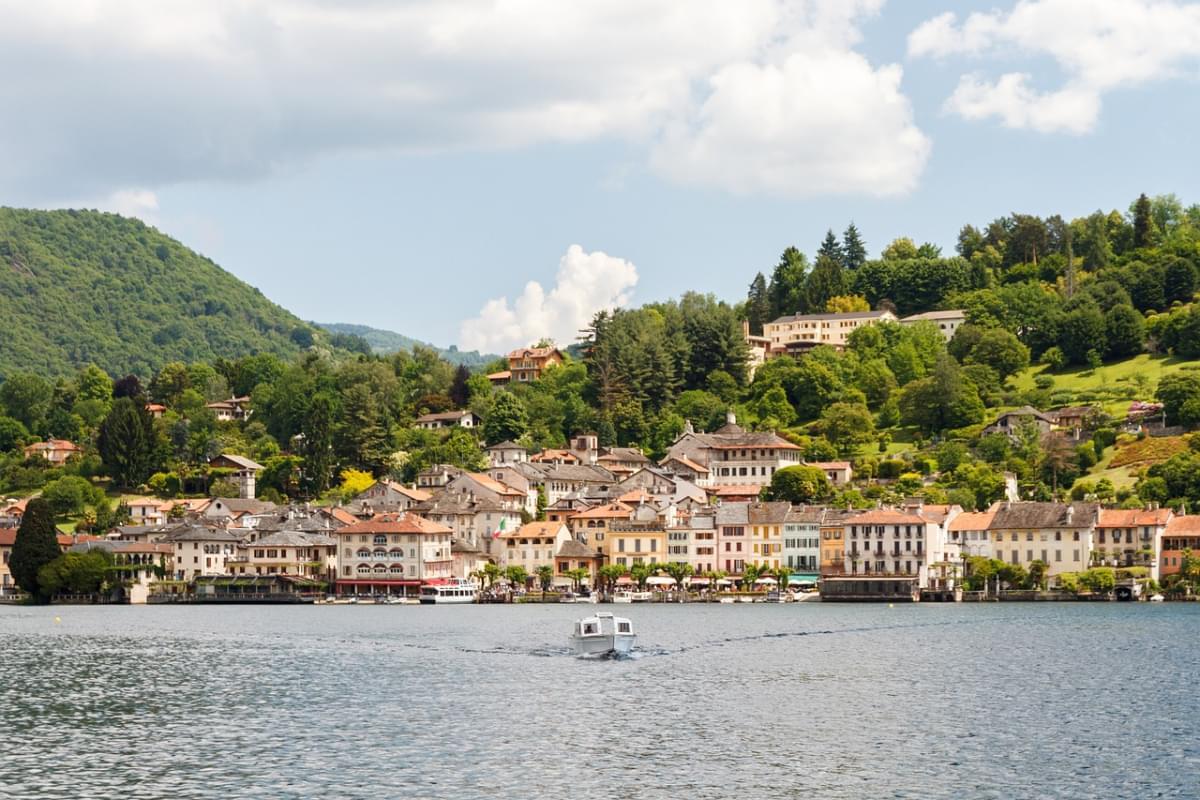 Between towns and islands, Lake Orta is one of the most beautiful and romantic in our country. On its shores are marvellous villages, and in its interior is the island of San Giulio, known as the'island of silence' for the peace it breathes.
An itinerary on Lake Orta can only start from Orta San Giulio, recognised as one of the most beautiful villages in Italy and awarded the Orange Flag. The centre of the village is completely pedestrianised and the main square is like a living room on the lake. From here you can set off to explore the Island of San Giulio, located about 400 m from the shore. The most important buildings are the Basilica of San Giulio and the Mater Ecclesiae Abbey. The village of Omegna is also very special. In its square you can see the Nigoglia, the small stream that flows towards the Alps.
The other villages are Pettenasco, Miasino, Gozzano, San Maurizio d'Opaglio, Pella and Nonio.
A boat service is available connecting the main towns on the lake.
SEE ALSO: Lake Orta: how to get there, what to see and where to eat
4 - Lake Maggiore and the Borromean Islands
 Lake Maggiore stretches between Italy and Switzerland; in Piedmont it includes the provinces of Verbano-Cusio-Ossola and Novara. Among the main Piedmontese localities bathed by the waters of the lake are Stresa, Verbania, Baveno and, above all, the Borromean Islands.
Isola Madre is the largest of the Borromean archipelago; here you can visit the 16th-century Palazzo Borromeo with an English garden featuring white peacocks and more than 2,000 flower species from all over the world. Isola Bella also has its own Borromeo Palace, in this case with an Italian-style garden. The only island to be inhabited is Isola dei Pescatori, also called Isola Superiore, which was once a fishing village and today its village has retained its original architecture. Here you can find excellent trattorias and the traditional handicraft market is famous, as well as the Ferragosto festival during which there is an atmospheric evening procession of illuminated fishing boats.
You can reach these beautiful islands by ferry from Stresa, Arona or Verbania, but the most recommended way to get around is by hop-on hop-off boat tour.
5 - Gran Paradiso Park
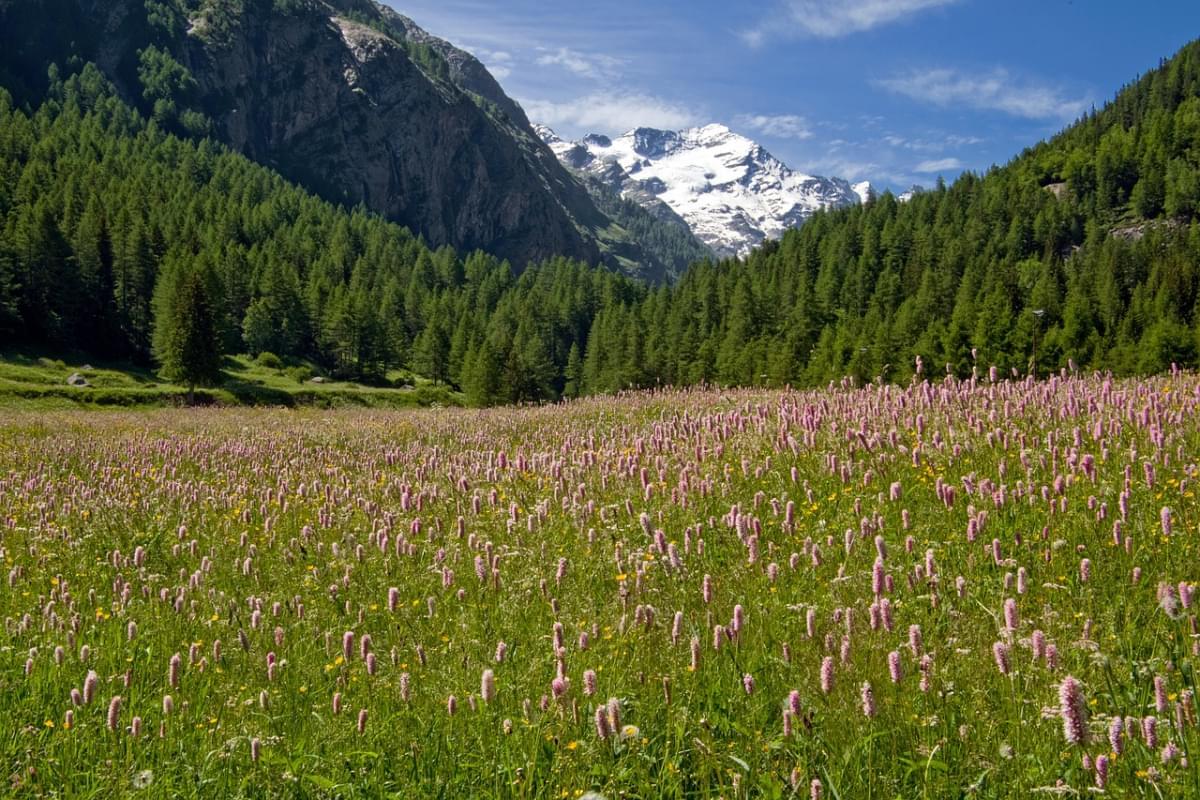 Situated between Valle d'Aosta and Piedmont, three mountains rise on the Piedmontese side that can already be seen from the Turin plain, the Ciarforon (3642 m), the Tresenta (3609 m) and the Becca di Monciair (3544 m).
The Orco Valley and the Soana Valley then expand, where various activities can be enjoyed all year round, from skiing to trekking. Among the municipalities along the valleys are Ceresole Reale, Noasca and Valprato Soana. Also worth seeing is the Prascondù Sanctuary in Ribordone. Various excursions to the surrounding alpine pastures and peaks start from here; in fact, it is located along the route of the Great Traverse of the Alps.
On Valle d 'Aosta territory, the Parco animalier d'Introd and the Paradisia Alpine Botanical Garden are worth a mention. The former is a wildlife park where many animals live, the entrance is in front of the headquarters of the Les Amis du bois association in the village of Villes-Dessus. The Botanical Garden is in Valnontey and inside you can admire 1,000 species of plants and rocks, not to be missed is the butterfly garden. The municipality of Cogne, on the other hand, is home to more than 80 km of trails for cross-country skiing.
6 - Alpe Veglia and Alpe Devero Natural Park
 Photo by Irene Grassi. This is the northernmost part of the Ossola Valley and includes the two alpine basins that together form the Natural Park established in 1995 and affecting the province of Verbano-Cusio-Ossola, in particular the municipalities of Baceno, Crodo, Trasquera and Varzo. Alpe Veglia can be reached from Varzo, precisely from the hamlet of San Domenico through the Cairasca Valley, while Alpe Devero can be reached by ascending from Baceno through the Devero Valley.
The mountain peaks of Alpe Veglia are a popular summer tourist destination and its valley is a vast plain covered with pastures and surrounded by larch forests, perfect for hiking and nature trekking. There are also three lakes to stop at, Lago d'Avino, Lago del Bianco and Lago delle Streghe.
Alpe Devero, on the other hand, is a popularski resort for snowboarders and skiers. From here, it is even possible to reach Binn in Switzerland via the Bivacco Combi Lanza bivouac at over 2000 m (for experienced hikers only). There is also a chairlift and two ski lifts to reach the summit of Monte Cazzola, from where there are 8 km of groomed slopes and countless off-piste trails.
7 - Ivrea and its lakes
 Ivrea is a city surrounded by five lakes: Lake Sirio, Lake San Michele, Lake Pistono, Lake Nero and Lake Campagna. They are very interesting to see and perfect for excursions thanks to the trails that connect all five.
Lake Sirio is the largest, and in summer you can rent canoes and rowing boats. Lago San Michele, on the other hand, is the smallest and part of the area around it is included in the Parco della Polveriera of the municipality of Ivrea. At Lake Pistono, the Castle of Montalto Dora is a remarkable presence, reflected in the mirror of water below. From Lake Campagna, on the other hand, you can admire the Castle of San Giuseppe, here there are also two picnic areas. Finally, Lake Nero is the northernmost lake and takes its name from the colour of its waters, which reflect the surrounding wild landscape.
But not only lakes, the city of Ivrea has also recently been listed as a UNESCO World Heritage Site. Its historical centre rises on a hill leading to the Savoy Castle and the Duomo, while the modern part spreads out on the plain. Food and wine tours with good food and excellent wine depart from Turin.
8 - Sanctuary of Oropa and Biellese villages
 Photo by Davide Papalini. The Sanctuary of Oropa enchants all its visitors, even non-pilgrims, given the beautiful surrounding landscape. It is located not far from Biella, at an altitude of about 1150 m in a kind of natural amphitheatre of mountains in the Biellese Alps. Inside the sanctuary there is a meteo-seismic observatory founded in 1874 that is still part of the regional weather network and the national seismic network. The complex has been a UNESCO World Heritage Site since 2003 and the entire area has become a "Riserva Naturale Speciale Sacro Monte di Oropa" (Special Nature Reserve Sacro Monte di Oropa), an ideal place for those seeking not only pilgrimage destinations but also pure magic.
Besides Oropa, another village in the Biellese area that you cannot miss is the Ricetto di Candelo. Considered one of the most beautiful villages in Italy, it was used as a warehouse for agricultural products in peacetime and as a refuge in times of war. Its corners are protected by four round towers, and it houses around 200 residential cells protected by high stone walls. Then there is also the village of Piazzo, which is nothing more than the upper part of the city of Biella that can be reached by funicular railway or by following the cobbled streets called 'rive'.
9 - Langhe, Roero and Monferrato
 Among the hills of the Langhe you can enjoy a unique experience discovering vineyards and picturesque villages. You can participate in numerous activities such as visits to wineries, hot-air balloon flights and various wine-tasting tours.
The Langhe lies between the provinces of Cuneo and Asti. Some of the world's finest wines such as Barolo, Nebbiolo, Dolcetto and Barbera are cultivated here. The area of Monferrato is located between Asti and Alessandria. In addition to Moscato d'Asti, it is known for its lavender fields that offer an enchanting view between June and July. Roero, on the other hand, is located in the north-eastern part of the province of Cuneo.
Among the towns to visit is Alba, the most important of the Langhe, famous for its wine and truffles; the town has a veritable underground archaeological heritage waiting to be discovered. But also Treiso, perched on a small hill and surrounded by vineyards, and then Barbaresco, where the wine of the same name is produced and home to the regional Enoteca, the symbol of the town is the imposing medieval tower from which you can admire the splendid panorama of the green hills.
10 - Racconigi Castle
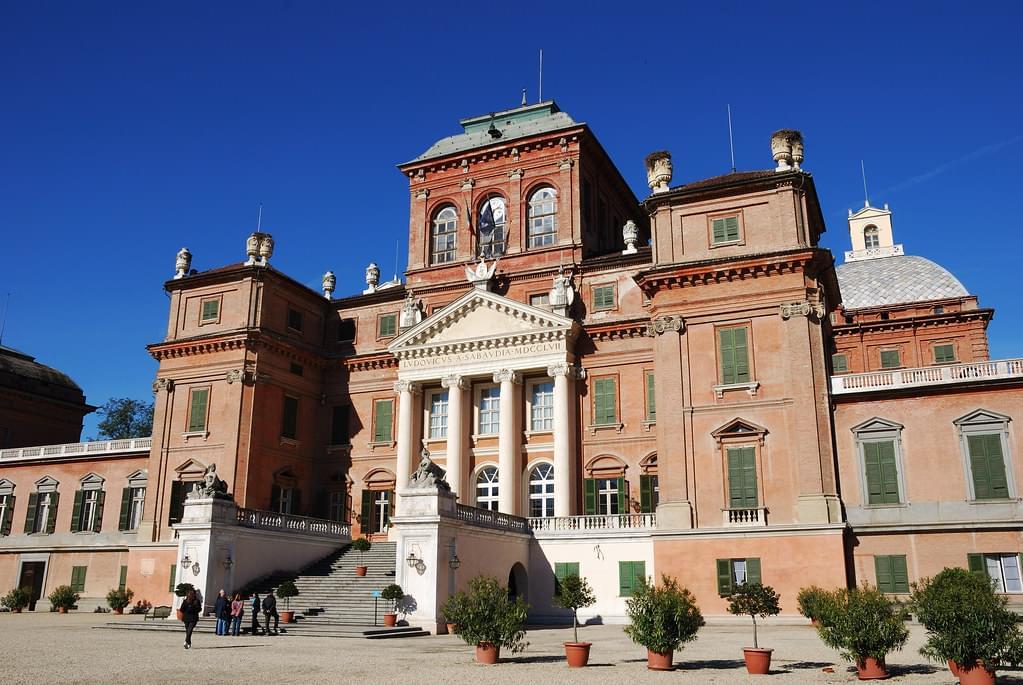 Photo by Alessandro. Over the course of its almost thousand-year history, it has seen numerous alterations and became the property of the Savoy family from the second half of the 14th century, so today it is part of the Savoy residences in Piedmont. It is located in the heart of the village of the same name and, besides later becoming the royal summer residence of the King of Sardinia, was also the birthplace of Umberto II, the last King of Italy.
Elegant and imposing, Racconigi Castle is surrounded by a majestic 170-hectare French-style park where you can relax and stroll among the greenhouses and farmsteads where storks nest. Inside, you can admire the original furnishings and portrait collections. Among the most interesting rooms you will find: the Hercules Room, the Diana Room, the Chinese flat, the dining room, the reception room, the library of Carlo Alberto and the royal chapel dedicated to the Madonna of the Snow. On the second piano nobile, on the other hand, are the flats that were modernised in the first three decades of the 20th century, such as Queen Helena's bedroom, Umberto II's bathroom and Maria José's music room.
11 - Alta Valsesia Park
 Photo by Coss5361. The protected area of the Alta Valsesia Park includes several municipalities in the province of Verbano-Cusio-Ossola and Vercelli, including Alagna Valsesia and Carcoforo, where the main entrances to the Park are located. Alagna is also part of Monterosa Ski, one of Europe's largest ski areas, and provides a shuttle service in summer from the car park at the hamlet of Wold to the Acqua Bianca resort.
The territory of the park covers 6500 hectares, from an altitude of 900 m a.s.l. at the bottom of the valley to 4559 m a.s.l. at Punta Gnifetti, one of the highest peaks of Monte Rosa. It is located in an area of'Walser' colonisation, a population of Germanic origin that has left its indelible mark in the characteristic architecture of the houses made of wood, in the High German dialects, in the ancient customs and traditional costumes. You can discover the history of this community by visiting theEcomuseum of Valsesia, which is spread over several locations, Alagna, Mollia, Rassa, Rima San Giuseppe and Rimella.
12 - Val di Susa and the Via Lattea Ski Area
 Photo by Patano. To the west of Turin lies Val di Susa, the largest in Piedmont. Between lakes, alpine passes and rivers, it is a complete and perfect territory for nature lovers and outdoor activities. In fact, it is possible to go mountain biking, hiking and walking between ups and downs. Of the alpine passes, the Argentera Valley offers scenery of uncontaminated beauty in both summer and winter. You will also come across the Dora Riparia, Lake Moncenisio and the Avigliana Lakes.
Don't miss a visit to the characteristic villages of Bussoleno and Exilles, both along the route of the Via Francigena. The fort of Exilles is one of the most important defensive systems in the region.
Also on the border with France is Via Lattea, Europe's second largest ski resort, which hosted the 2006 Winter Olympics ski competition. It stretches up to the 2823 m of Monte Motta, has 70 ski lifts and 243 slopes, with a total length of about 400 km. In short, a paradise for mountain and snow sports lovers.
13 - Sacra di San Michele
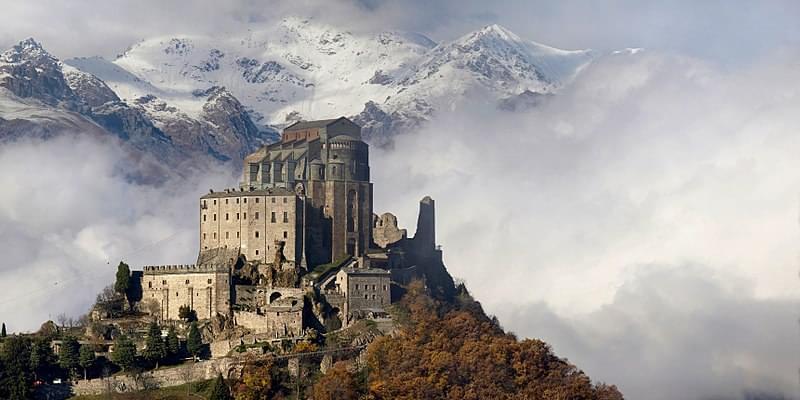 Photo by Elio Pallard. More appropriately called the Abbey of San Michele della Chiusa, it is an architectural complex perched on the summit of Mount Pirchiriano. It sits on an imposing 26-metre base at an altitude of 960 metres, overlooking the border between the Cottian Alps and the Po Valley, and is usually the first stop on an Italian itinerary along the Via Francigena, being reached on foot via a path that connects it to the village of Chiusa di San Michele and another to the village of Sant'Ambrogio.
The current church is the result of more than a century of interventions, the last damage unfortunately suffered recently, in January 2018 when a fire broke out on the roof, fortunately not causing too much damage.
This evocative Benedictine abbey inspired the writer Umberto Eco in 1980 to set his most famous novel'The Name of the Rose'.
14 - Agliè Castle
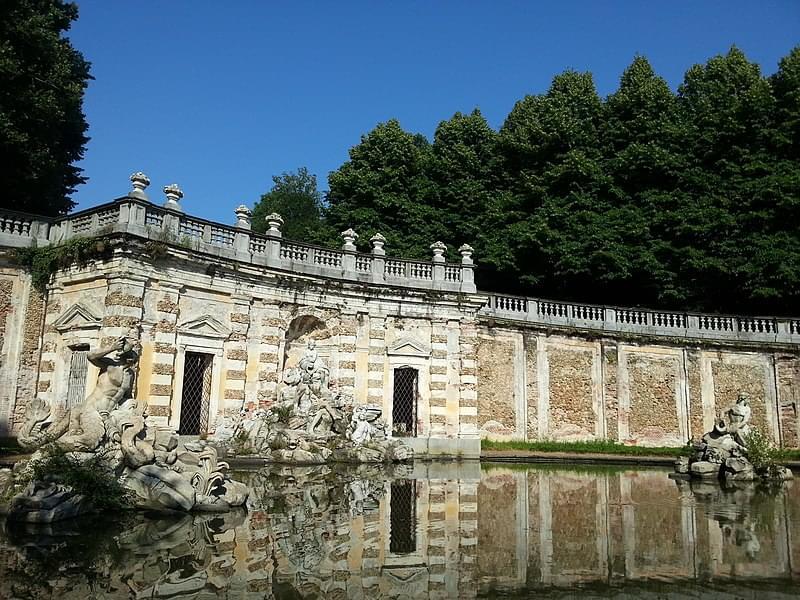 Photo by Ambra75. The Ducal Castle located in the municipality of Agliè is an elegant and imposing construction begun in the 12th century on behalf of the San Martino family, originally from Canavese. This is another UNESCO site and Savoy residence in Piedmont. In recent years it has also been used as the setting for a number of television series, one of them being Elisa di Rivombrosa.
Attached to the castle is a large park of about 320,000 square metres that surrounds it and was laid out in romantic forms in 1839, with Italian and English gardens organised in terraces on three levels. At the entrance is an 18th-century fountain symbolising the Dora Baltea River flowing into the Po, the work of Ignazio and Filippo Collino. In addition, all around the castle structure you can see 17th and 18th century rural buildings, such as the laundry, farmsteads and mill. Among the most beautiful interior rooms is the Salone della Caccia (Hunting Room), attributed to Birago di Borgaro, with depictions of hunting scenes and trophies, containing two paintings by French painter Berger of King Carlo Felice and Queen Maria Cristina of Bourbon.
15 - Sestriere, Val Chisone, Usseaux and Fenestrelle
 The highest municipality in Italy, Sestriere, is in Piedmont and is located on the hill that connects Val Chisone with Val di Susa. Here is the church of Sant'Edoardo, built by the entrepreneur and politician Giovanni Agnelli in honour of his son who died in a plane crash. It features a bronze portal on which the seven children of Edoardo Agnelli are depicted.
Val Chisone includes two other important towns that are worth a visit, they are Usseaux and Fenestrelle. The former has been awarded one of the most beautiful villages in Italy and the Orange Flag; in the village there are numerous characteristic fountains and original painted sundials. Fenestrelle, on the other hand, is home to the fortress of the same name, made up of various parts connected by roads, stairs and the exceptional internal staircase known as the 'covered' staircase with 3996 steps. Guided historical tours are organised inside the fortress, as well as various cultural events every year.
Plan your trip: how to get there and where to stay
Piedmont is easily accessible thanks to Turin airport, 16 km from the city centre, which is connected to the main European and Italian capitals (flights from €61.00 - see offers). But also with high-speed trains connecting Turin to the main cities of Italy, Switzerland and France.
If you want to take a trip to discover the places of art you can stay in Turin, it is very convenient for travelling(accommodation from €50.00 per night). Conversely, if you want to enjoy some relaxation away from the city, choose a lakeside location such as Stresa or Arona(accommodation from €60.00 per night), or Barolo in the hills of the Langhe(accommodation from €65.00 per night). The latter is also perfect for culinary lovers.
Fora stay in the mountains, Ceresole Reale is ideal for venturing into the Gran Paradiso Park, while Varzo for the Alpe Veglia Park(accommodation from €55.00 per night). For a skiing week, we recommend more Alagna in Alta Valsesia or Sestriere in Val di Susa(accommodation from €70.00 per night).