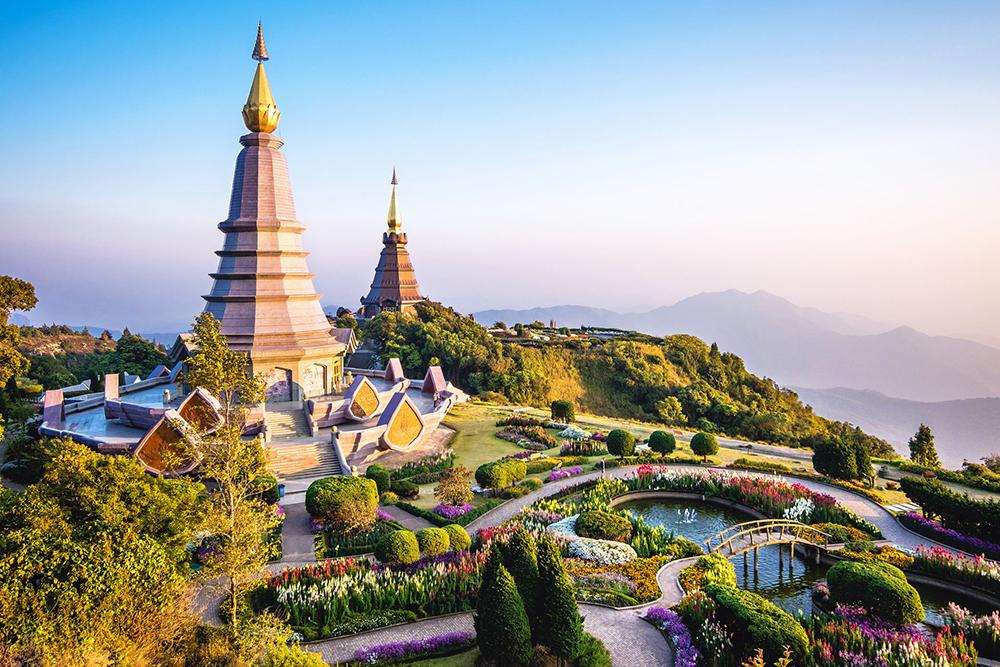
Thailand is one of the most fascinating countries in South-East Asia and one of the best travel destinations in the world, famous for its tropical beaches, exquisite cuisine and golden temples, a lush, tropical country rich in culture, beauty and history with a myriad of places to visit.
The land of smiles, as Thailand is called, despite the huge influx of tourism, has been able to maintain a strong sense of cultural identity, as in the past it had skilfully avoided colonisation and has been able to absorb Western influences while retaining its rich heritage characterised by a solid monarchy and fervent Buddhist faith.
Thailand, what to see
Chiang Mai
Sukhothai
Ayutthaya
Phuket
Pattaya
Koh Samui
Khao Sok National Park
Erawan National Park
Khao Yai National Park
Bangkok
Koh Phangan
Pai
Koh Phi Phi
Koh Chang
Mae Hong Son
Chiang Dao
Kanchanaburi
Koh Lanta
Koh Chang
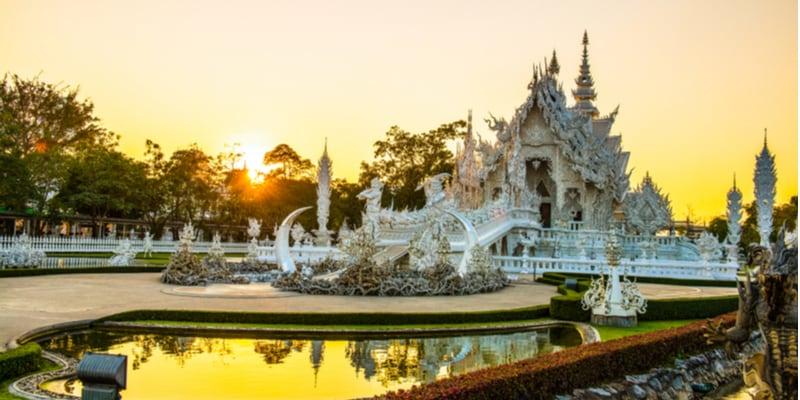
Every type of traveller will find an incredible variety of attractions in Thailand, with breathtaking white sandy beaches bordered by coconut palms, ancient ruins and magnificent ornate temples, beautiful national parks, paradisiacal islands, floating markets, rice paddies covering endless plains in a landscape dotted with tiny villages and green mountains, rubber plantations in the southern and eastern provinces of the Gulf and chaotic and incredible cities such as Bangkok, with its ultra-modern urban landscape winding through quiet canals and riverside communities, mercantile hubs such as the historic Chinatown with dozens of labyrinthine alleys full of small shops, markets that conceal an intoxicating mix of sights, sounds and smells.
In addition to all this, Thailand is also a land for adventures of all kinds, such as extreme sports on land and sea, trekking in hill tribe villages, abseiling down sheer limestone cliffs and some of the best diving sites in the world thanks to its clear, warm waters.
Most islands and beach resorts have at least one dive centre that organises trips. The main diving destinations in Thailand are generally considered to be Ko Similan, Ko Surin, Richelieu Rock and Hin Muang and Hin Daeng, all off the Andaman coast.
And then there is the endless variety of different regional cuisines that differ greatly and offer a wide range of flavours in various blends of sweet, sour and salty, spicy and spicy variations.
For all these reasons, and many more, visiting Thailand requires time and organisation, choosing well what to see according to one's interests and which parts of the country to favour. Two weeks is considered the minimum length of stay necessary to enter this world of attractions to be explored through its network of infrastructure and transport that allows one to travel by bus, train, car, boat or through a network of low-cost airlines serving many regional cities.
The best time to visit Thailand

Thailand is a tropical country with a climate divided into three seasons: rainy (May-October), cool (November-February) and hot (March-May). Our summer months between June and August are the period when there is a substantial increase in rainfall, which peaks in September and October.
The hot season, which can also be very humid, is for those who want to spend their time exclusively on beaches, the sea and islands. You can find information on travelling to Thailand in August here.
Consequently, the best time to travel to Thailand coincides with the cool season from November to February when nature explodes in all its strength, temperatures are still high but manageable and rainfall is sporadic.
This is also the time when most of Thailand's myriad festivals are organised. Thailand's traditional festivals reflect the local culture and lifestyle, which is why they are a factor to keep in mind when planning a trip to coincide with one of these festivals.
Two of the most famous events are the Songkran and Loi Krathong festivals.
The Songkran Festival is the traditional Thai New Year celebrated from 13 to 15 April. On the night of the 12th full moon of the year (which usually falls in November), Thailand's waterways sparkle with colour and glittering displays. This is the time when Thais celebrate the Loi Krathong Festival.
When to go to northern Thailand
The north of Thailand has slightly lower temperatures than the south and especially than the interior of the country and is the least rainy area. In the mountainous areas of the north, winter temperatures can even approach zero in winter and are generally very cool at night compared to during the day. The dry season in the north runs from November to April.
When to go to Phuket
On the west coast the rains fall in the months of May to October, very heavy rains especially between September and October and the ideal time to visit the beaches in this area Phuket) is from December to March.
When to visit Koh Samui
On the south-east coast the rains are concentrated in the months of October to December and are very heavy compared to the rest of the country, and the ideal time to visit this area (Ko Samui) is from late January to mid-April.
Where to go in Thailand

Deciding where to go in Thailand depends on two important factors: what to do and when to go. The different areas of the country, from north to south, offer visitors such a selection of places, activities and experiences that you need to know and select them according to your interests.
Central Thailand is usually the arrival point in the country with the bustling capital Bangkok, which is located right in the middle of the country in an area of great interest that is also home to the archaeological site of Ayutthaya and the gentle river town of Kanchanaburi.

Bangkok is the first stop on almost every Thai trip. The capital holds together centuries-old tradition and chaotic modernity with glittering temples, canal-side markets and a series of downtown skyscrapers. The Banglamphu district is strategically placed for walking distance to the main sights of the Ratanakosin area: the dazzling ostentation of the Grand Palace and Wat Phra Kaeo, the lively and grandiose Wat Pho and National Museum.
Bangkok's lavish gardens have long been the nerve centre of the Siamese kingdom. The vast complex is filled with throne rooms, royal residences and gilded Buddhist temples, and today most of the court and temples are open to visitors.
For a taste of Bangkok's lively hustle and bustle, the Chinatown district gives you a chance to find yourself in a labyrinth of markets and narrow alleyways amidst shops of all kinds, colourful shops and neon signs.
An original and different way to visit the city is to take a small cruise on the waters of its canals to get an unusual perspective on hidden non-tourist temples and local markets.
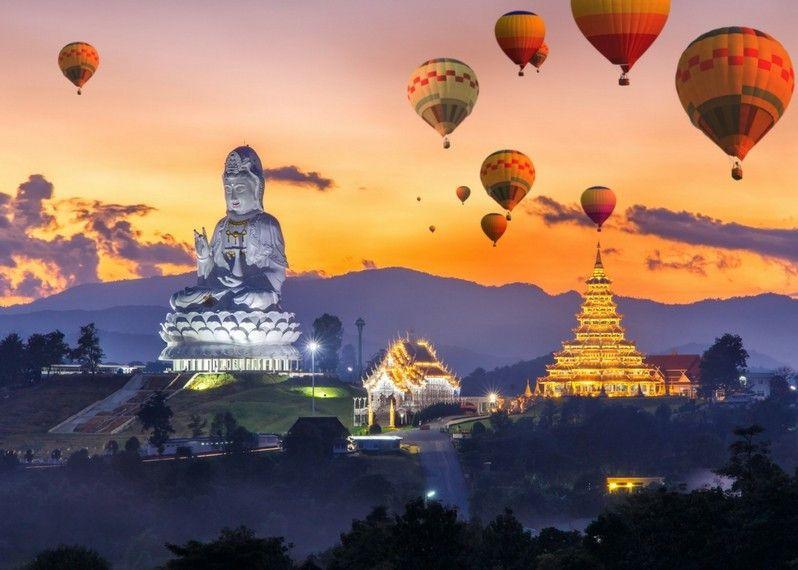
Northern Thailand has a more mountainous terrain with cooler temperatures and a more relaxed atmosphere. With its misty mountains and lush valleys, the region is famous for jungle trekking and the chance to meet indigenous hill tribes.
The main city in the north is Chiang Mai, which boasts cheaper and less dynamic rates than Bangkok, making it an excellent base for exploring the province and some small mountain towns such as Pai or Chiang Dao.
To the north-west of Chiang Mai is Mae Hong Son province, Thailand's least populous region, which lends itself well to an on-the-road tour on the Mea Hong Son circuit through the area's tranquil ponds.
The south of Thailand, on the other hand, is characterised by beaches and islands. The west coast along the Andaman Sea is home to some of Thailand's best known resorts such as Phuket, a beach destination par excellence that attracts and hosts the majority of tourists visiting the country.
Other resorts not to be missed in the area are Hat Patong, Hat Kamala and Hat Kata.
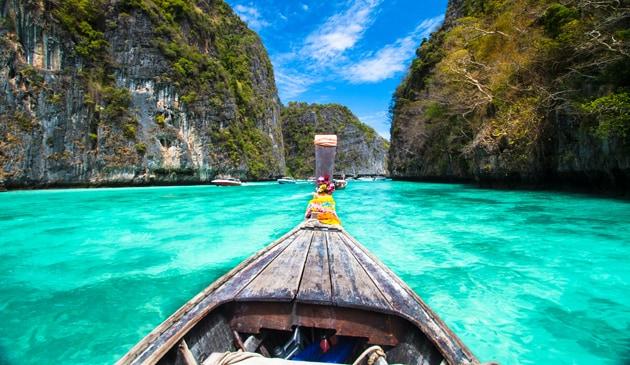
Little Ko Phi Phi is an important social centre surrounded by turquoise sea and spectacular limestone cliffs that characterise this stretch of coastline. A well-known beach is Maya Bay, famous for appearing in several international films.
The Krabi coastline and Khao Sok National Park are among the best places to visit in the south, with countless islands and beaches with golden sand in places like Hat Noppharat Thara-Muko Phi Phi National Park and Muko Lanta National Park. Krabi Province is famous for some of the country's most iconic beaches such as Ao Nang Beach and the beaches of Railay (or Rai Leh), a peninsula that can only be reached by boat from Ao Nang. The area is also world famous for rock climbing.
The shimmering sands of Muko Similan Marine National Park, Khao Lak and Muko Surin Marine National Park in Phang-nga Province are ideal places to relax amidst sea, sand and 40 small islands with caves, mangroves and protected lagoons.
The islands of Koh Lanta, Koh Lipe or Koh Kradan are perfect for getting to know the archipelago, while the east coast has fewer islands, but thanks to a shorter monsoon period they can be enjoyed almost all year round. Koh Samui has its own airport and is mainly home to exclusive holiday resorts. Koh Phangan and Koh Tao are more popular with backpackers, digital nomads and divers.
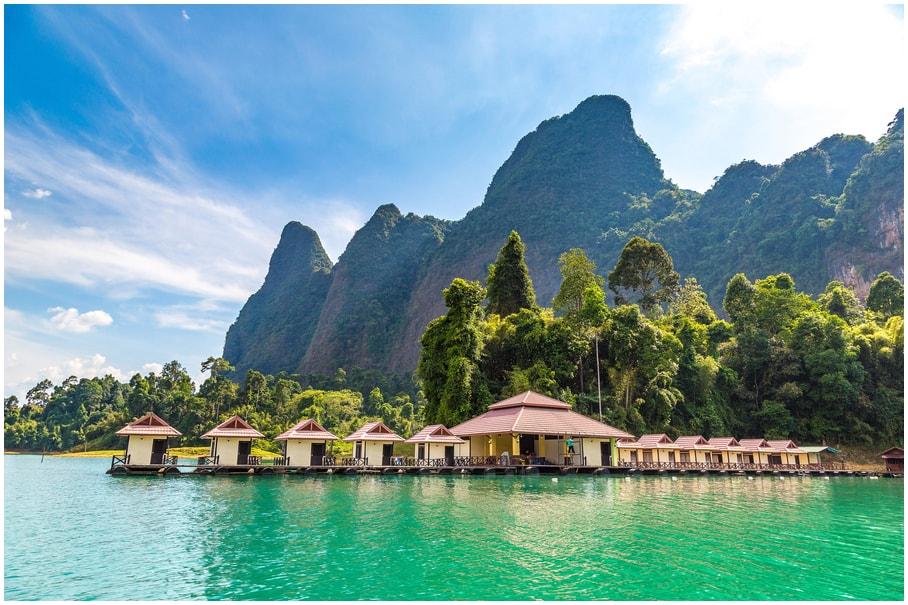
Khao Sok is a spectacular park, characterised by lakes with floating bamboo houses to be explored as an adventure through different walking trails, kayaking, bamboo rafting, wildlife spotting or jungle overnighting.
The Samui archipelago off the Gulf Coast is considered one of the best places to go in Thailand due to the widest white sand beaches and the greatest variety of accommodation and facilities to accompany them.
Koh Samui is one of Thailand's most naturally beautiful islands, with its long white sandy beaches fringed with palm trees. Samui has over a dozen diving companies, offering diving and snorkelling expeditions and courses throughout the year. There are also numerous spas, meditation retreats, island tours, ziplines, kiteboarding and cooking classes.
A few hours from Bangkok is Pattaya, a beach resort for those who prefer a quieter place to relax or do water sports. The more remote, rocky island Ko Tao is gaining in importance as the largest diving training centre in South-East Asia.
In general, with more than 1,400 islands emerging from the Gulf of Thailand and the Andaman Sea, it can be difficult to choose just one beach destination, although whichever destination you choose, you are guaranteed to find Thailand's best stretches of sand for relaxing in the sun and swimming in crystal-clear waters surrounded by limestone cliffs.
One travel option in Thailand is to visit some of the many Buddhist temples and ruins scattered throughout the country to discover its more spiritual soul in fascinating and evocative places dotting the land from north to south.
Thai temples are called wat (buildings) and are colourful with rich decorations of various sizes and architectural styles. Most of Thailand's thousands of temples are active and about 200 of them have received Royal Temple status. Some of the most important and well-known temples are located in the capital Bangkok, such as Wat Pho (the Temple of the Reclining Buddha), Wat Arun (the Temple of Dawn), Wat Mahathat and Wat Suthat.
Outside the capital, the Wat Phra Pathom Chedi in Nakhon Pathom and the Wat Phra Phutthabat (the Buddha's footprint temple) in Saraburi are temples of utmost spiritual and social importance and are among the most beautiful and impressive structures to be found.
Another popular place to find many ancient temples and ruined palaces is Ayutthaya, Thailand's ancient capital near Bangkok recognised by UNESCO.
Kanchanaburi is a laid-back town built on the river about two hours from the capital. What makes it famous is its old railway known by the macabre name 'Death Railway' to which a local museum is also dedicated. In spite of its dark past, today the railway makes for a pleasant journey past the cliffs along the river and across the famous bridge over the River Kwai.
Kanchanaburi makes it possible to explore the countryside around the river by cycling, to learn about the local food markets and to tour the nearby Erawan National Park, one of Thailand's best protected natural areas and home to beautiful waterfalls.
Visa for Thailand
To enter Thailand for tourism purposes, an entry visa is not required as long as your stay does not exceed 30 days.
Once you disembark at a Thai airport, a stamp is placed in your passport, which is valid as a visa for 30 days. From land borders, on the other hand, the stamp is valid for no more than 15 days. The documentation required for entry into the country includes a passport with a residual validity of at least 6 months at the time of arrival and at least two free pages remaining for the visa to be affixed. Tourists are required by law to carry their original passport at all times.
Immigration authorities reserve the right to request documentation proving suitable means of subsistence in the country and exit.
At Thai Embassies, Consulates and Honorary Consulates it is possible to apply for a multiple-entry tourist visa valid for 6 months, within which it will be possible to stay in Thailand for up to 60 days. The multiple tourist visa has a cost of 5,000 Thai Baht (about 125 Euro).
Map and Map
Author: Giorgio Calabresi
Thailand