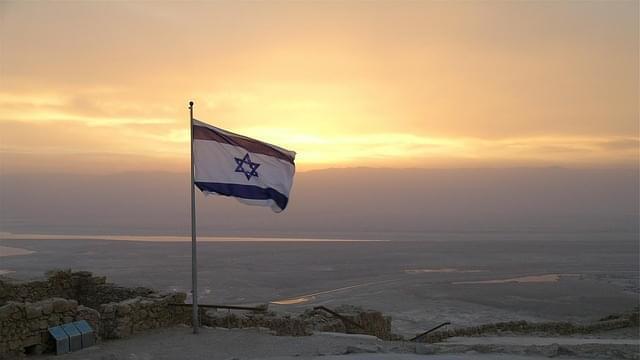
 Israel is the Promised Land of Jews, Christians and Muslims, a fascinating territory that combines places of historical significance such as Jerusalem, Masada and Jericho with ultra-modern cities such as Tel Aviv. Due to the eternal conflict between Israel and Palestine, it is not an entirely safe territory and therefore requires caution and prudence to visit. If you are thinking of planning a trip, here is everything you need to know before you leave to play it safe: when to go, what to see and recommended itineraries.
Travelling informed: useful info
Inhabitants: 9,021,000
Capital: Jerusalem; the decision to make it the capital was taken by the State of Israel, but this decision has not been recognised by most countries, including Italy, which have their embassies in Tel Aviv
Languages: Hebrew, Arabic and English
Local currency: Shekel (NIS) / €1.00 = 3.83 NIS
Climate: type of climate, average temperatures
Time zone: +1h from Italy
Distance from Italy: 2,281 km (3-4 hour flight) from Rome to the capital
When to go? Climate and best time
There are three main climate zones in Israel, namely the Mediterranean Coast, the Inland Region and the Southern Region. In general, the best time to visit are the intermediate seasons, but there are climatic variations between one area and another, so depending on the holiday you intend to take, it may make sense to choose one season rather than another. Let's look in detail at the best time for each of the areas:
Mediterranean coast (Tel Aviv): we recommend visiting in May-June and September-October. July and August can be very hot and winter a bit rainy. Midsummer is sultry and humid, with peaks over 40 degrees. Easter holiday periods are expensive and crowded. Winter from November to February is not suitable for beach life.
Inland region (Jerusalem): best period from April to October, temperatures are pleasantly warm and rainfall almost absent. January and February are the coldest months with the highest concentration of rainfall
Southern region (Eilat and Dead Sea): here the climate is desert. This area is most enjoyable during the intermediate seasons, but it would probably be even better to visit in winter, in the months between November and March.
What to see in Israel: must-see towns and attractions
1 - Jerusalem
 Photo by veronica crocitti.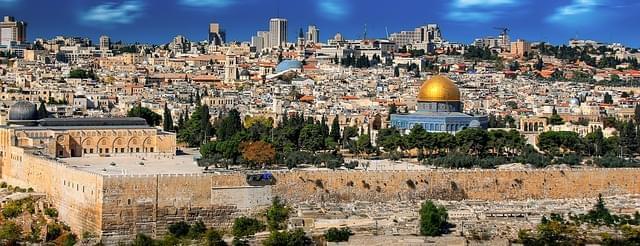
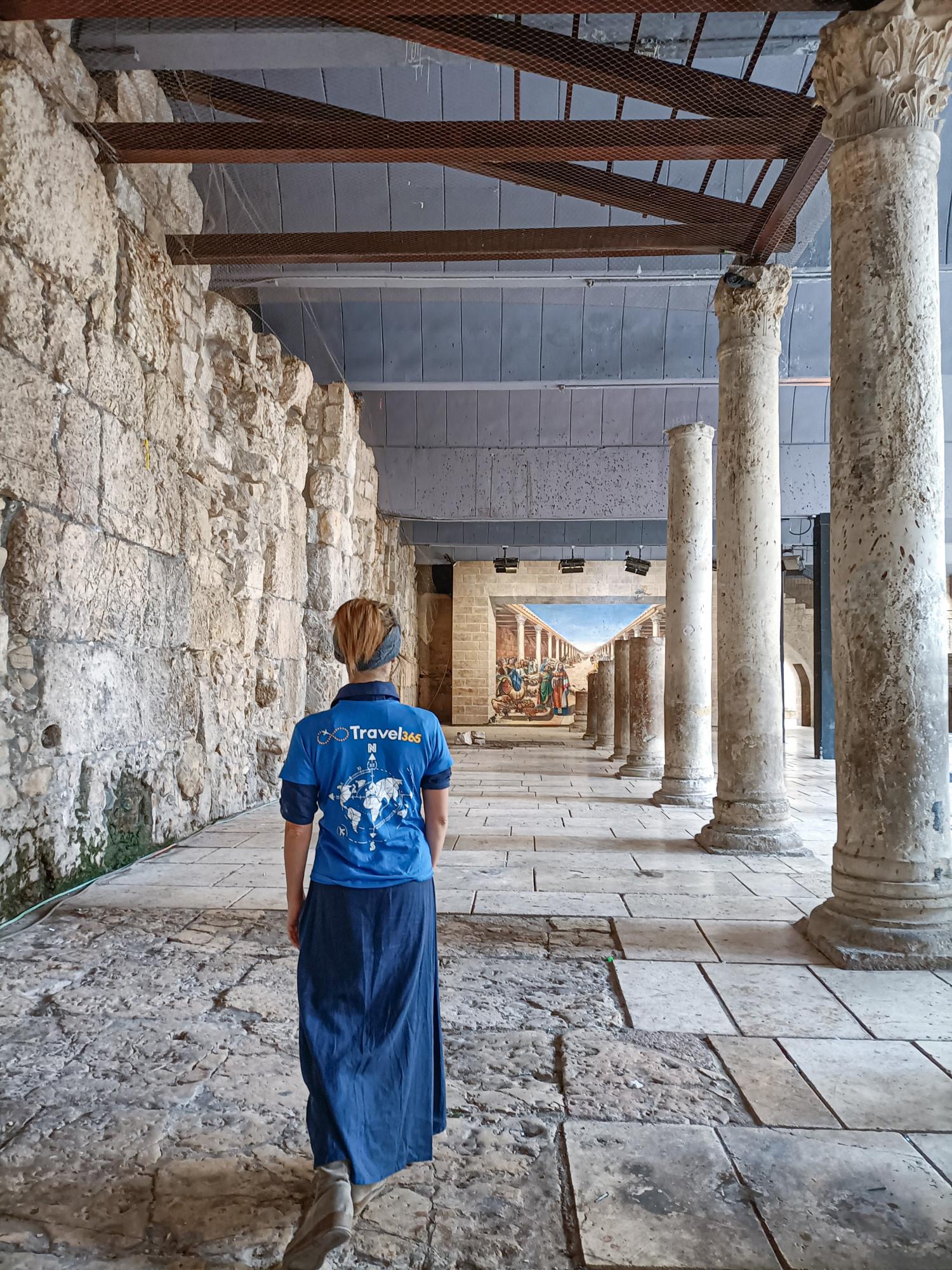 Photo by veronica crocitti. Capital of Israel, Jerusalem is a city rich in history and charm that deserves an in-depth visit. Absolutely not to be missed are the four neighbourhoods, the Muslim, Jewish, Christian and Armenian, where the alleys intersect and smell of life.
Starting from the Jaffa Gate, visit the Tower of David, walk along the Via Dolorosa where the Church of the Holy Sepulchre is also located, then take the narrow staircase leading to the Wailing Wall and from there to the Esplanade of Mosques or Temple Mount. Stop at the Mahane Yehuda market , or shuk, and eat something typical.
Finally end the day on the Mount of Olives from where you can admire the city turning red at sunset.
SEE ALSO: What to see in Jerusalem
2 - Masada
 Photo by veronica crocitti.
  Photo by patano. An ancient fortress built on a rock in the desert at an altitude of 400 metres overlooking the Dead Sea, Masada in the 1st century BC was the seat of Herod the Great's palace, equipped with baths, underground storerooms and large cisterns.
Due to its location, this town was difficult to access, yet the Romans built an access ramp and besieged it; but before Masada was conquered, all the members of the Jewish community of the Sicarii committed mass suicide. Today it is possible to visit the fortress by walking up or taking a comfortable cable car to walk among the well-preserved remains that will make you relive the history of this place, but it is advisable to book theguided excursion directly.
and a small wine tour to the north of Israel from Tel Aviv.
Also, if you want to discover all the secrets of a cultural/religious centre of the calibre of Jerusalem, we recommend booking a walking tour with a local guide, so that you don't miss a single corner of this incredible open-air museum.
3 - Dead Sea
 Photo by veronica crocitti.
  Photo by veronica crocitti.
 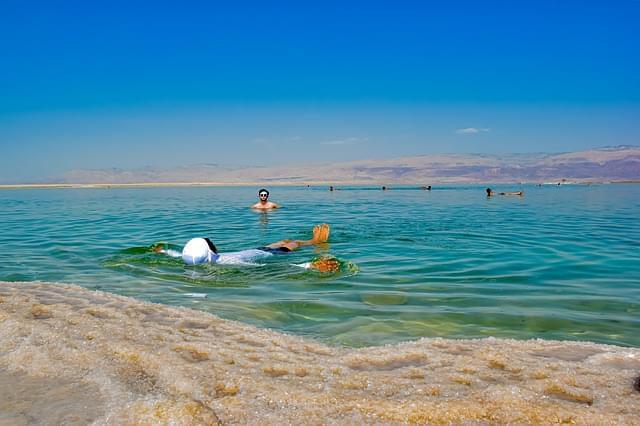 For those looking for a bit of relaxation, the beaches of the Dead Sea are the ideal place. Where in the 1st century B.C. Cleopatra came for mud-based beauty treatments, today you can find state-of-the-art spas and healing centres.
Most of the facilities are in Ein Bokek, south of the basin; here, in addition to several public and private equipped beaches, there are many clinics where one can undergo massage, hydrotherapy, healing mud and other treatments.
Alternatively, further north is the Ein Gedi oasis , a nature reserve overlooking the Dead Sea with a beautiful hotel and spa.
SEE ALSO: Dead Sea: where it is, how to get there and what to see
4 - Tel Aviv
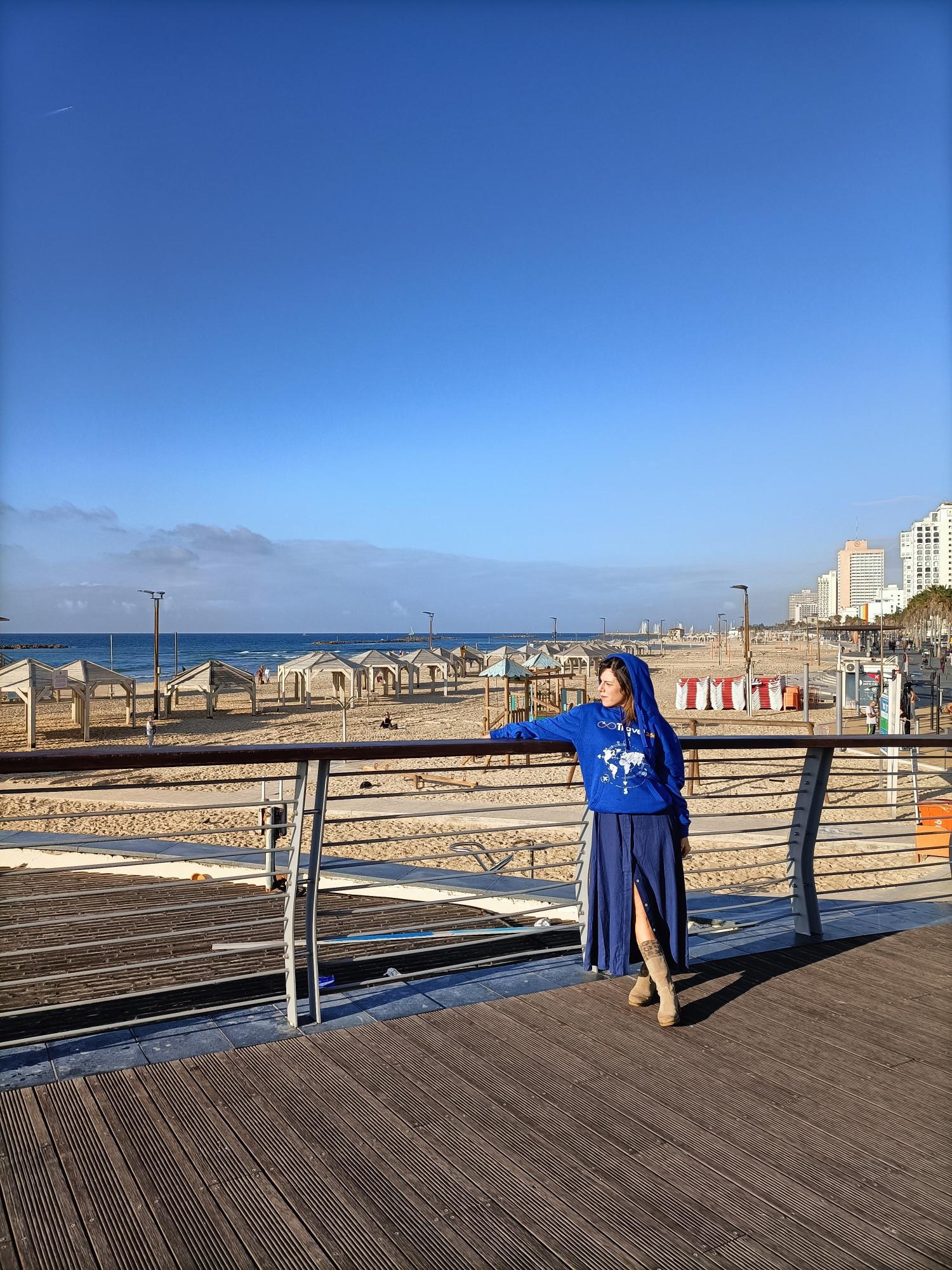 Photo by veronica crocitti.
  Cosmopolitan, avant-garde and overlooking the Mediterranean Sea, Tel Aviv has long beaches where, whatever the season, young people and surfers flock in search of the right wave. But that's not all because this is a city to be toured and experienced to discover its every nook and cranny.
Don't miss the French quarter "Neve Tzedek" with its numerous art galleries and sophisticated boutiques, Carmel Market to delight your eyes and stomach, the old port and its alleys leading to the old city of Jaffa where you will also find the famous flea market. And in the evening you can rock out in one of the many clubs scattered around the city or enjoy dinner by the sea, Tel Aviv does indeed enjoy a vibrant nightlife.
SEE ALSO: What to see in Tel Aviv
5 - Haifa
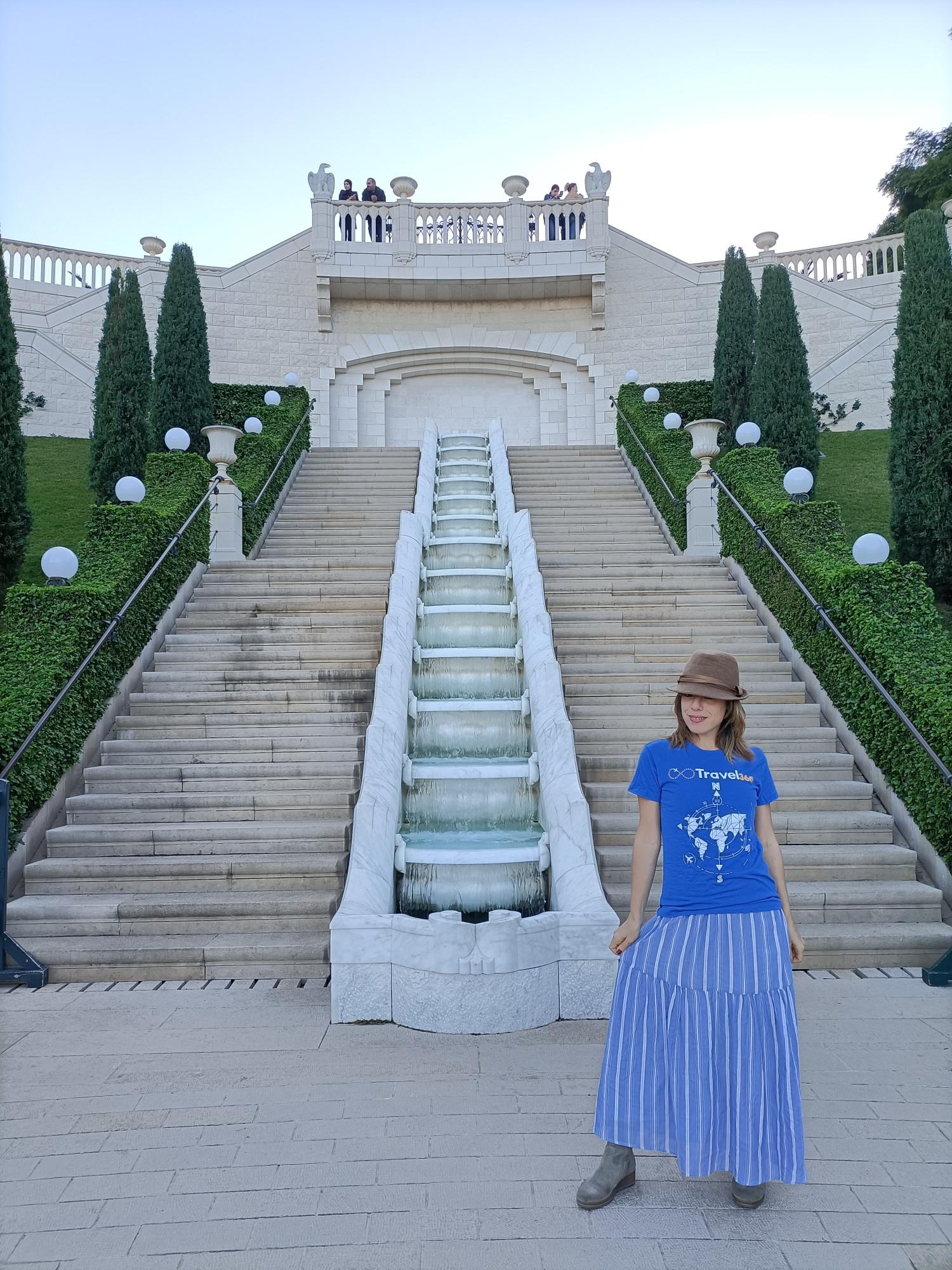 Photo by veronica crocitti.
  100 kilometres from Tel Aviv, on the Mediterranean coast, lies this large city known for being inhabited by Jews and Muslims living in harmony.
Haifa stands on a mountain overlooking the bay, where the country's main port is located.
The main attraction here are the Bahai Gardens, declared a UNESCO World Heritage Site, which can be visited on your own or with a guided tour and consist of 19 terraces surrounding the beautiful LA B'ab Shrine.
Also not to be missed are the Stella Maris Lighthouse and the Carmelite Monastery, from where one can admire a splendid panorama stretching as far as Lebanon.
6 - Ancient Jericho
 Jericho is the oldest fortified city in the world, dating back 8000 years before the birth of Christ and for years disputed by Israel and Palestine.
Situated close to the Jordan River, it now belongs to the Palestinian Territories and a passport is required to enter from Israel, but it is a must-see destination for those in the area.
Ideally, you should visit it accompanied by guides who are experts in history and theology and who will be able to take you on a tour of discovery and show you the important archaeological sites such as the Palace of Hisham, the Greek Orthodox Monastery of the Temptation and the Monastery of Koziba, 9 kilometres from Jericho.
7 - Safed
 Safed or Tsfat is one of the 4 Jewish holy cities, located in the Galilee in northern Israel at an altitude of 900 metres. It is famous for its many interesting synagogues and its cemetery where some of the most important personalities of the Jewish world rest in peace, but also for some museums.
The most interesting museums are the Tzaddik Educational Visitor's Centre, the Bible Museum and the Museum of Prehistoric Man. Also worth a visit are the Safed Fortress located on an 800-metre hill and the Red Khan Palace in the old part of the city, an example of 13th-century Mameluk architecture.
8 - Nazareth
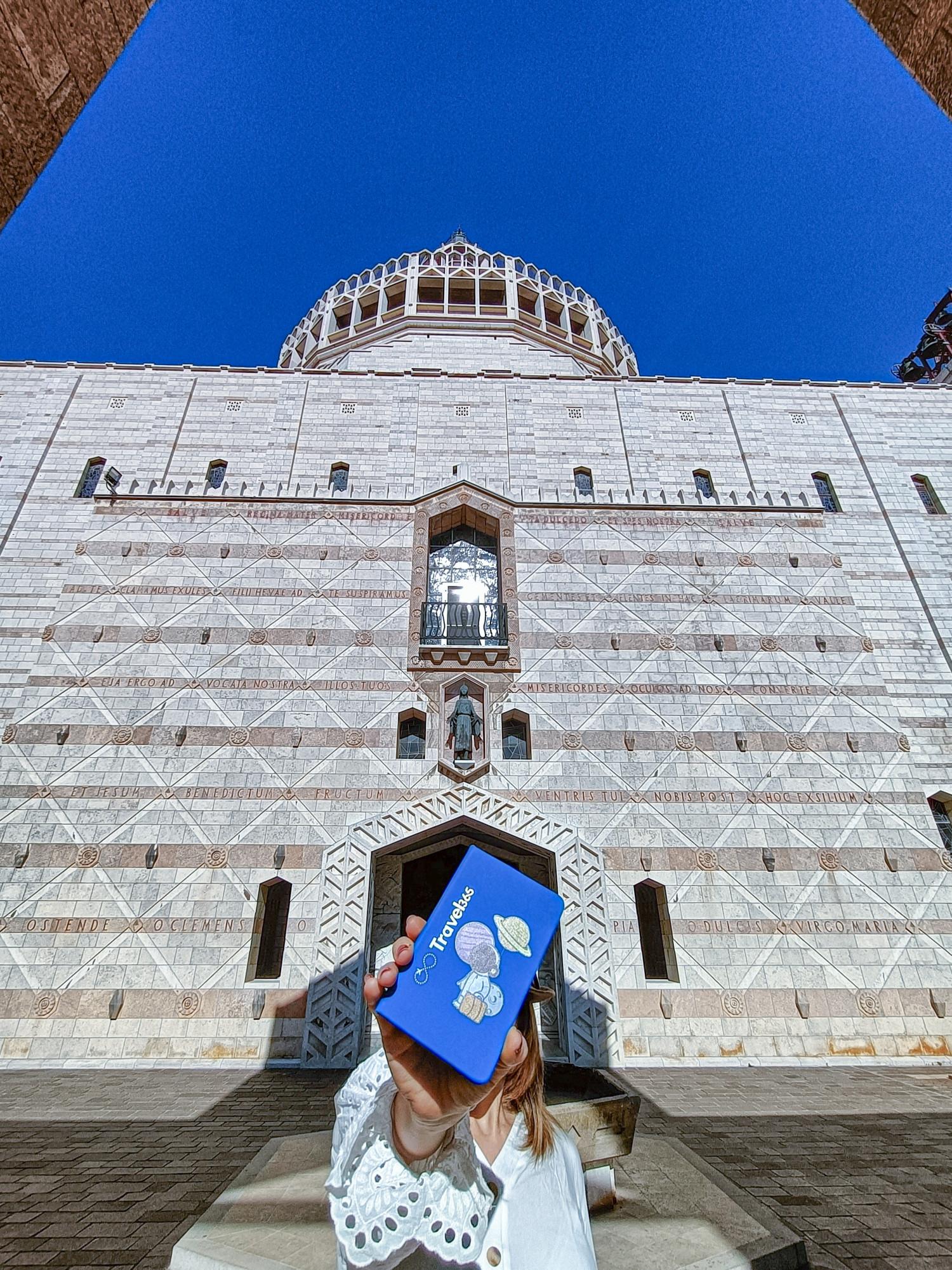 Photo by veronica crocitti.
  Cradle of Christianity and the place where Jesus grew up, Nazareth in the lower Galilee is today a modern Israeli city that nevertheless preserves its history.
See the Basilica of the Annunciation, the largest church in the entire Middle East, built where the Archangel Gabriel announced the birth of Jesus to Mary; inside is the Annunciation Grotto, identified as the House of Mary. Then, in the old city, there is the Church of St Joseph, where Mary's groom had his workshop, a market and the Makam Al Nabi Sain mosque, the Mosque of Peace and the famous White Mosque, which preserves various artefacts useful for reconstructing the ancient history of Nazareth.
Visits to Nazareth are often combined with visits to Tiberias and Galilee, through excellent organised tours with transport included.
9 - Negev Desert
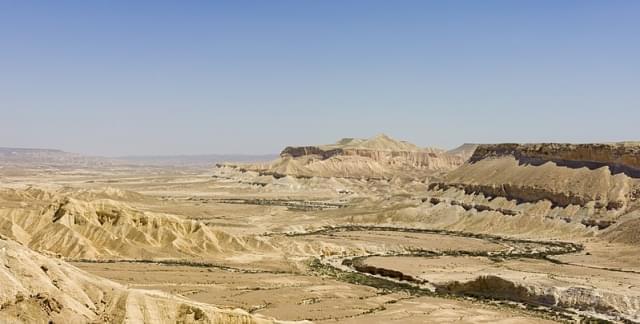 Photo by Godot13. More than half of Israel is occupied by a desert area that conceals geological treasures, ancient cities, scenic vineyards and natural pools; we are talking about the Negev Desert. It covers more than 12,000 square kilometres with an arid and barren landscape, cut in two by Route 40 and characterised by small villages and Bedouin camps where water is a precious commodity.
Ideal to explore on board a jeep. Here you can admire the ancient Nabatean settlement Avdat, the excavations of Shivta, the largest crater in the world called Makhtesh Ramon, the spectacular natural sculptures of the Timna Valley and Eilat, the southernmost point of the country, from whose peaks you can enjoy spectacular views.
10 - Neot Kedumin Park
 Photo by Maryland GovPics. Halfway between Jerusalem and Tel Aviv lies a beautiful nature reserve, a true paradise on earth created to house the trees and flowers mentioned in the Bible. At Neot Kedumin Park one encounters various natural and agricultural landscapes such as the 'Forest of Milk and Honey', 'The Valley of the Song of Songs' and 'Isaiah's Vineyard'.
It is ideal to visit the reserve accompanied by expert guides who illustrate and make the Bible something real through 'illustrated' stories and explanations. Inside the park there is also an old cistern, which has always been of basic importance since the surrounding area is very arid and plants need water to survive.
11 - Tiberias
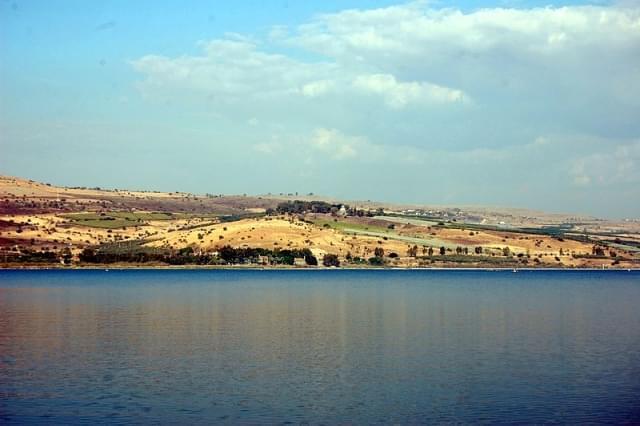 Photo by Don Tommaso. Capital of Galilee, Tiberias stands on the shores of the lake of the same name and is one of the 4 holy cities of Jewish tradition.
Although most of its heritage has been destroyed and lost, millions of worshippers and visitors arrive here every year, attracted by the atmosphere and the beauty of the scenery.
Don't miss the Tomb of Moses Maimonides, reached by a walk along the Horns Of Hattin path, the Church of the Multiplication of Loaves and the Hamat Tverya National Park where there are 17 hot springs and a synagogue. Finally, we suggest watching The Galilee Experience, a film projected continuously on the second floor of the marina building that tells the 4000-year history of Galilee.
As already mentioned, we particularly recommend the combined tour that includes a visit to Tiberias and Galilee with an excursion to Nazareth.
12 - Bethlehem
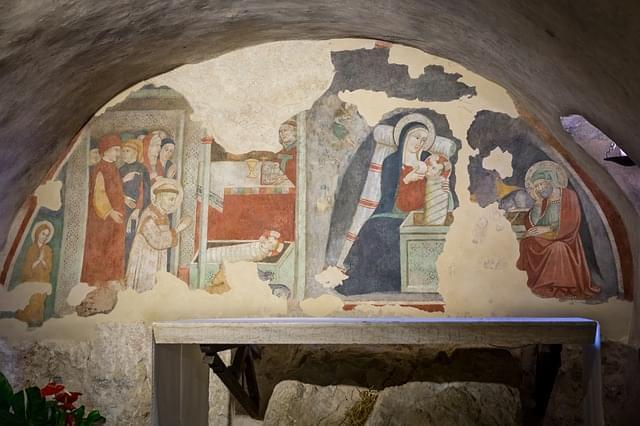 Although it is not in Israel, but in the neighbouring Palestinian Territories, Bethlehem is definitely worth a visit. The town where Jesus was born today is a modern, touristy place full of souvenir shops.
A must-see is the Basilica of the Nativity in Manger Square built right above the cave where Jesus was born. The cave is divided into the Altar of the Manger and the Altar of the Nativity where both Christians and Greek Orthodox celebrate mass and a star indicates the exact spot where the 'Little Child' came into the world. Not far away is the Grotto of Milk, where the Virgin Mary is said to have suckled her child.
Recommended Tours and Excursions
Recommended Itineraries
9-day itinerary: discovering the history of Israel
Day 1: Departure from Italy; arrival in Tel Aviv; check-in at hotel and overnight stay
Day 2: Breakfast at the hotel and departure from Tel Aviv; in the morning, visit of Jaffa, Caesarea, and Haifa; in the afternoon, visit of Acre; arrival at Tiberias, on the lake of the same name, check-in at the hotel, dinner and overnight stay
Day three: breakfast and a day dedicated to visiting the places around the lake; visit Tabgha, the Mount of Beatitudes, Capernaum and Safed; return to Tiberias, dinner and overnight stay
Day Four: Breakfast at the hotel; departure from Tiberias and visit Nazareth and the Church of the Annunciation; afternoon visit to Beit Shean and then on to the Jordan Valley; arrival at the Dead Sea, hotel accommodation, dinner and overnight stay
Day Five: Breakfast at the hotel; swimming in the Dead Sea; visit the Rock of Massada and Ein Gedi Nature Reserve; departure for Jerusalem, check into hotel, dinner and overnight
Day six: Breakfast at the hotel; morning visit to the New City of Jerusalem; afternoon excursion to Bethlehem; return to Jerusalem, dinner and overnight
Day Seven: Breakfast at the hotel; tour of the Old City of Jerusalem and the Mount of Olives
Dayeight: Breakfast at hotel; departure from Jerusalem; arrival in Tel Aviv; check-in at hotel; free time to visit the city; dinner and overnight
Day nine: breakfast at the hotel; transfer to the airport and return to Italy
How much does it cost? Price details
Price per person from: €2,000.00 per person
Price includes: flights from/to Rome and Milan, transfers from/to airport, internal transfers, accommodation in hotels and half board, guide for the whole tour, visits and excursions as per programme
Theprice does not include: insurance, lunches and meals not indicated, airport taxes, possible tips, personal expenses
8-day itinerary: travel between Israel and Jordan
Day 1: Departure from Italy; arrival in Tel Aviv; check-in at hotel; dinner and overnight stay
Day2: Breakfast at the hotel; tour of Tel Aviv and the most important sights; late afternoon transfer to Mitzpe Ramon, check into hotel, dinner and overnight
DayThree: Breakfast at the hotel; visit Mitzpe Ramon and Timna Park; cross the border into Jordan and visit Wadi Rum; 4x4 desert tour, check into the tented camp, dinner under the stars and overnight
Day Four: Breakfast and departure from the camp; arrival in Petra and visit to one of the world's oldest cities; hotel accommodation, dinner and overnight
DayFive: Breakfast at the hotel; departure from Petra towards the border with Israel at the Allenby Bridge; after crossing the border, return to Israel; visit the Massada Fortress and the Dead Sea and possibility of bathing; departure for Jerusalem, check into hotel, dinner and overnight
Day six: Breakfast at the hotel; morning visit to the New City of Jerusalem; afternoon visit to Bethlehem; return to the hotel in Jerusalem, dinner and overnight stay
Day Seven: Breakfast at the hotel; visit the Old City of Jerusalem and the Mount of Olives; return to hotel, dinner and overnight
Day eight: breakfast at the hotel; transfer to the airport and return to Italy
How much does it cost? Price details
Price per person from: €2,400.00 per person
Price includes: flights from/to Rome and Milan, transfers from/to airport, Jordan entry visa, internal transfers, hotel accommodation and half board, guide for the whole tour, visits and excursions as per programme
Theprice does not include: exit taxes to Jordan and Israel to be paid locally, insurance, lunches and meals not indicated, airport taxes, possible tips, personal expenses
What to know about travelling to Israel
Where and how to get there
Israel is located in the Middle East and overlooks the Mediterranean Sea. To the north it borders Lebanon, to the west Syria and Jordan, and to the south Egypt. The Israeli city of Elat overlooks the Gulf of Aqaba, a northern extension of the Red Sea. The capital chosen by the country, but not recognised by the majority of nations, is Jerusalem, an important city for some of the world's largest religions.
Itcan be reached by direct flights from Italy to the cities of Tel Aviv and Eilat. As a matter of practicality, it is always advisable to fly to Tel Aviv; always go to the airport about three hours before departure, as security checks can be very long indeed - flights from €60.00 - see offers
Security, visa and documents required
Entry requirements: passport with residual validity of 6 months; no tourist visa is required for stays of less than 90 days, but a temporary permit is issued with the traveller's details to be kept until the time of return to Italy; it is possible to request that no stamp be affixed to the passport so as not to have problems with other countries
Vaccinations: no vaccinations required
Restrictions: often the stamps of Arab countries (Iran, Lebanon, Libya, Sudan, Syria, Yemen) in the passport can lead to lengthy interrogations and punctilious controls but are not a restriction. On the contrary, the Israeli stamp in the passport is an obstacle to entry into these countries. Therefore, if you plan to visit one of these, ask the Israeli authorities not to stamp your document
Security: the main tourist cities, such as Tel Aviv, are quite safe. In the rest of the country the situation is constantly changing (sometimes there are violent incidents, clashes between demonstrators, attacks with firearms), always check the Farnesina website before leaving
Useful advice: it is useful to go to the airport in Tel Aviv at least 4 hours in advance because the controls can make you lose a lot of time; always check the timetable and take into account that from Friday before sunset to Saturday after sunset the country celebrates Shabbat, the "time of rest"; maintain a respectful and decent behaviour towards the local reality
Getting around and about in Israel
Within the big cities you can get around comfortably with the efficient and inexpensive EGGED nationalbus company. A single journey costs around 7 ILS (€2.00) per person and payment can be made either directly on the bus (paying in cash) or with a service card that works like a prepaid card.
Connections between cities are provided by buses and trains, but the best solution is to rely on organised tours or private transfers. It should also be mentioned that most transport is not guaranteed during Shabbat, the Jewish weekday.
Where to eat
Israeli cuisine is colourful, multi-ethnic, open to the flavours of other cultures without forgetting the more traditional recipes. This is especially evident in big cities such as Tel Aviv where you will come across an endless variety of eateries. Regardless of what you want to eat, you will find solutions for all budgets: from the cheapest restaurants (where you can eat for a few euros) to the most luxurious places in terms of location and cuisine (in this case, it will be easy to spend up to €60.00 per person).
Also popular with locals are the food markets, where you can immerse yourself in typical atmospheres and scents: one of them? The Carmel Market, ideal if you like to taste the delicious local street food and more.
Lunch and dinner times tend to coincide with Italian times.
How to pay
The country's currency is the New Israeli Shekel (ILS): €1.00=3.88 ILS.
In large cities such as Tel Aviv, as well as on arrival at the airport, it is not difficult to find ATMs to withdraw cash or money-changers to exchange euros for local cash.
We advise you to always change a small amount, as moving away from the metropolis or simply in small shops/popular markets they do not accept credit card payments but only cash, preferably local cash.
How much does a holiday cost?
Flight and travel costs: from Italy, flights start at €45.00. Trains and buses are ideal for internal travel, costing around 5 ILS (€1.50) for a single journey; taxis, on the other hand, cost 12 ILS (€3.10) per call and around 3.80 ILS (€1.00) per kilometre.
Accommodation costs: hostels cost between ILS 38 and ILS 58 (€10.00/15.00); flats and mid-range hotels between ILS 136 and ILS 213 (€35.00/55.00) per night; more luxurious hotels from ILS 330 (€85.00) upwards.
Minimum daily budget formeals and attractions: the minimum for two main meals and a breakfast is about 147 ILS (€38.00) per day. Also consider a budget of 97 ILS (€25.00) for daily attractions.