Hide Index
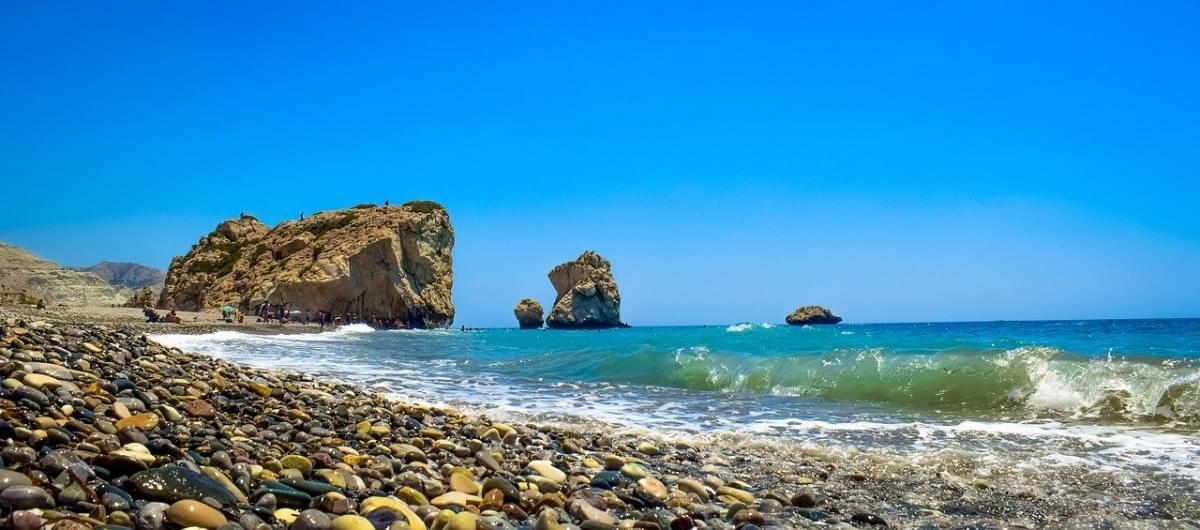 Also known as theisland of Aphrodite, Cyprus is a crossroads between West and East. It is famous not only for its golden beaches and crystal clear sea, but also for being rich in history and culture.
Both the island and its capital are divided into two parts by the Green Line, which separates the Republic of Cyprus (dependent on Greece) from the Turkish Republic of Northern Cyprus. Due to its strategic importance, it has been subjected to the attempts of domination by many peoples: there are traces of Roman and Byzantine rule on the island, as well as remains of British military bases in the areas of Akrotìrion and Dekèleia.
Here is what to see: attractions, beaches and recommended itineraries
Sights and attractions in Cyprus
1 - Buyuk Han, Nicosia
 Photo by Paul Lakin. The Buyuk Han is located in northern Nicosia and is the largest caravanserai on the island. It is a valuable piece of architecture whose construction dates back to 1572 by the Ottomans. At the time, it served to provide refreshment for merchants, who upon their arrival found not only an inn in which to eat but also a fountain in which to perform ablutions, a mosque in which to pray and some places to rest.
Inside what today has the appearance of a fortress are shops, bars and restaurants, galleries of artisans of typical artefacts, paintings and ceramics. This building is also very atmospheric at night, thanks to its special lighting and the events that are organised inside, including live music and folk dance performances.
SEE ALSO: 10 Things You Must See in Nicosia (Cyprus)
Directions: in Arasta Sokak, in the Turkish area of North Nicosia; 300 metres (4 min walk) from Ledra Street Border Crossing - Get directions
Hours: always open
Ticket price: free
2 - Selimiye Mosque or St Sophia Cathedral, Nicosia
 Photo by Adam Jones. The former Cathedral of St Sophia now houses the minarets of the Selimiye Mosque in the Turkish Cypriot part of Nicosia. Access to the place of worship is only permitted barefoot, women must also have their heads covered as a sign of respect. Before being a mosque, the Gothic building was a Catholic cathedral built during the reign of the Latin Archbishop Eustorge de Montaigu in 1208 A.D., but has undergone several destructions and reconstructions over the years.
In 1570, the Turks invaded the island and the cathedral became a mosque, named after the Ottoman Sultan Selim II, who led the empire during the conquest of Cyprus. Inside the building, one can see that the stained glass windows and colourful paintings typical of Christian art are no longer present, in favour of white walls and red carpeting.
Directions: in Selimiye Meydani, in the Turkish area of North Nicosia; 450 metres (6 min walk) from Ledra Street Border Crossing - Get directions
Hours: always open
Ticket price: free
3 - Troodos Mountains and the Kykkos Monastery
 Photo by Oceco. There is also a mountain range on the island of Cyprus that, amidst the silence of the forests, holds a UNESCO World Heritage Site. The Troodos Mountains are home to ten Byzantine churches, built between the 11th and 16th centuries. To see them all requires several days and certainly your own transport, but at least a couple are within everyone's reach.
Each church has its own special characteristics. The fascinating Kykkos Monastery, for example, is linked to a legend about the icon of the Virgin Mary painted by the Apostle Luke that is found inside. Apparently, the Byzantine governor of the island Manuel Voutomitis got lost in the forest during a hunting trip and arrived in the vicinity of the monastery. Here, he made the acquaintance of a hermit, Isaiah, who lived in the monastery. Accustomed to having no contact with people, the hermit did not respond to Voutomitis' request for directions, who treated him badly. When the latter became seriously ill, however, he asked God what he could do to get well. The solution was to apologise to Isaiah by giving him the very icon of the Virgin Mary that was kept in the imperial palace in Constantinople.
How to get there: the Troodos Mountains are in the central-western region, less than 100 km from the capital Nicosia. The Kykkos Monastery is located in the Marathasa Valley, 13 km from the village of Pedoulas. You arrive by your own transport - Get directions
Hours: June to October from 10:00 to 18:00, November to May from 10:00 to 16:00
Ticket price: €5.00
4 - Ghost Town of Famagusta
 Famagusta is one of the main cities in the Turkish Republic of Northern Cyprus and an unmissable tourist destination. The city's ancient history has its roots in the prehistoric communities that settled on the island, later joined by numerous peoples and cultures over the centuries: Greeks, Persians, Macedonians, Egyptians, Romans, Byzantines, Venetians and Ottomans. Encounters and clashes have left their mark on the appearance of the urban centre, creating something truly unique, starting with the large Yirmisekiz Ocak Meydani square with its large bronze statue of Kamal Ataturk, the father of modern Turkey.
What is most striking, however, are the great walls that encircle the whole of the old town. By climbing them, you can enjoy some of the most spectacular and romantic views of the city. The result of the Venetian occupation of the island, the walls were erected during the 16th century to defend the centre from raids by Saracen pirates. Also of note is the Othello Fortress, formerly a castle from the time of the Crusades, later incorporated into the walls.
How to get there: from Nicosia by KIBHAS bus (1 h 10 min, 11.50 Turkish Lira, €1.65 per person) or by car in 1 h 14 min (70 km) - Get directions
Hours: always open
Ticket price: free
5 - Paphos and the Kato Paphos Archaeological Park
 Paphos is a town at the south-western tip of the island rich in archaeological sites that tell the stories and legends of the peoples who passed through Cyprus: Greeks, Romans, Byzantines, Franks, Venetians and Ottomans. Paphos was declared a UNESCO World Heritage Site in 1980 and it is here that the legend of the birth of Aphrodite is linked. The Baths of Aphrodite, a natural pool in which the goddess is said to have bathed, hold waters that, even today, are said to be a powerful elixir of beauty.
The necropolises known as the 'Tombs of the Kings' were once the eternal resting place of high-ranking officials, buried near the sea to be the first to board Charon's ferry. Near the monumental harbour complex is also the Kato Paphos Archaeological Park, with the remains of four luxurious Roman villas dating from the 2nd to 4th century AD.
How to get there: by OSYPA buses from the main tourist resorts to Kato Paphos station; a rental car is preferable for getting around the area - Get directions
Timetable: Paphos is always accessible; Kato Paphos Archaeological Park is open daily, from 16 September to 15 April from 8:30am to 5pm; from 16 April to 15 September from 8:30am to 7:30pm
Ticket price: Kato Paphos Archaeological Park €4.50
6 - Limassol and the Kourion Archaeological Park
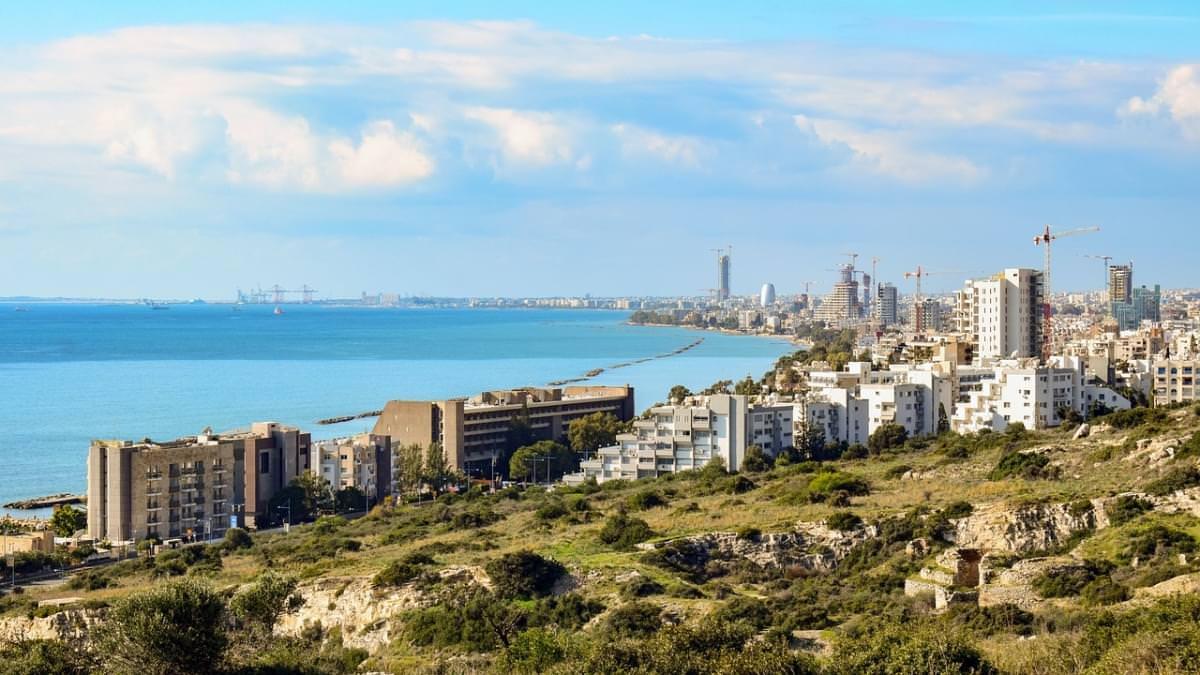 On the Limassol coastline there are archaeological sites as well as sea and beaches, and opportunities for fun and relaxation with restaurants and clubs. Crusaders on their way to the Holy Land passed through here, as the city overlooks Akrotiri Bay, one of the Templars' headquarters. It is the second most populous city after Nicosia and houses a medieval castle from the end of the 12th century with wonderful rooms and a museum of artefacts from the period. It is also said that the wedding of Richard the Lionheart and Berengaria of Navarre took place in its chapel.
In the old town is the Archaeological Museum, which houses pottery, terracotta statues and other artefacts covering a period from Neolithic to Roman times. The archaeological site of Kourion also contains ruins from the Roman and Byzantine periods, with wonderful mosaics, including the House of Achilles, depicting the moment when Odysseus reveals Achilles' true identity at the court of King Lycomedes in Skyros. During the summer months, many events and theatrical performances take place here in the unique scenic setting of the 2nd century BC amphitheatre, which can seat up to 3500 people.
How to get there: from Nicosia by Cyprusbus (1 h 45 min, one way €7.00) or by car in 1 h (90 km) - Get directions
Opening hours: the city is always accessible: Kourion Archaeological Park is open from 16 September to 15 April daily from 8:15 am to 5:15 pm, from 16 April to 15 September daily from 8:15 am to 7:40 pm
Ticket price: Kourion Archaeological Park €4.50
7 - Cyprus Archaeological Museum in Nicosia
 Photo by Héctor Ochoa 'Robot8A'. The Archaeological Museum of Cyprus in Nicosia collects the history of the island and above all testifies to its importance as a strategic cultural point of the ancient world. Consisting of 14 rooms, the Museum offers visitors a chronologically ordered tour through different eras, from the Neolithic to the Byzantine period.
Of particular interest are the collections of terracotta votive statues dating from 600-500 B.C., which come from the sanctuary of the village of Ayìa Irìni in Turkey. In the basement, on the other hand, there are several carved tombs with their respective sarcophagi, both in stone and clay.
Directions: in the historical centre of Nicosia, in the Greek part; 900 metres (12 min walk) from Ledra Street Border Crossing - Get directions
Hours: Tuesday, Thursday and Friday from 8 a.m. to 4 p.m., Wednesday from 8 a.m. to 5 p.m., Saturday from 9 a.m. to 4 p.m. and Sunday from 10 a.m. to 1 p.m. Closed on Mondays.
Ticket price: €4.50
8 - Byzantine Museum of Cyprus in Nicosia
 Photo by NicosiaRepublicCyprus. Founded with the aim of saving Byzantine icons from decay and illegal trafficking, it now houses the largest and most significant collection of Byzantine art in Cyprus. Some 230 works and 48 icons dating from the period between the 9th and 19th centuries are exhibited in the museum, which is divided into three large rooms arranged in chronological order.
In this way, theevolution of icons and the influences they underwent from the Italian and Venetian Renaissance can be seen. Also on display are frescoes, ecclesiastical utensils, manuscripts and fragments of seven 6th century mosaics from the apse of the church of Panagia Kanakarias in Lytrangomi.
How to get there: in the historical centre of Nicosia, in the Greek part; 850 metres (10 min walk) from Ledra Street Border Crossing - Get directions
Hours: Monday to Friday from 9 a.m. to 4.30 p.m., Saturday from 9 a.m. to 1 p.m.
Ticket price: €4.00
The 10 most beautiful beaches in Cyprus
1 - Aphrodite Beach, Pafos
 Also known as Petra Tou Romiou, it is called 'Aphrodite's Beach' because, according to Greek mythology, it was in this stretch of sea that the goddess of beauty and love chose to emerge from the waters.
The beach is located in Pafos and is one of the most photographed spots on the island, although it is rarely crowded. The huge rock that dominates the beach was, according to myth, the first earthly home of the Greek goddess.
Where is it located: Pafos, in the southwest of the island. It is located along the main road and there is a convenient free car park where you can leave your car. The beach itself is reached via a pedestrian subway - Get directions
Ideal for: relaxation
Type: mainly pebbles, with a few stretches of dark sand
2 - Coral Bay, Peyia
 Photos by Богдан Митронов-Слоб.... Coral Bay competes with Aphrodite Beach for the title of the most beautiful beach in Cyprus. Apart from being beautiful, it is also well equipped and easily accessible.
It consists of golden sand and is located in an inlet. Thanks to the calm, crystal-clear sea and the sheltered location, it is particularly popular with families with children, but not only, divers frequent this stretch of sea thanks to the magnificent diving sites off the bay.
Location: in the district of Pafos, it is served by free parking and is easily accessible via the E701 and turning into Coral Bay Ave - Get directions
Ideal for: relaxation, diving
Type: rocks and golden sand
3 - Nissi Beach, Agia Napa
 Nissi Beach is the beach for young people. It extends for about 500 metres with a small extension represented by a narrow tongue connecting the mainland to an uninhabited islet.
Formed of the finest sand, it is located in Agia Napa, the entertainment and transgression-rich area of Cyprus. Indeed, Aya Napa is home to many beach bars famous for the wild parties that entertain locals and tourists alike from late afternoon until late at night. The scenery from the beach is breathtakingly beautiful, needless to say the waters lapping against it are incredibly clear, but the atmosphere may not appeal to those seeking peace and relaxation.
Where it is located: Agia Napa, in the south-east of the island. It can be reached on foot, by bus (from Paralimni, Protaras or Agia Napa intercity bus 101, from Larnaca intercity bus 711, €4.00 each way) and by car (via the A3 and the E326 coming from Larnaca, Nicosia and Pafos, the E306 and then the A3 if coming from Protaras) via the main access road to Ayia Napa, it is well signposted - Get directions
Ideal for: nightlife
Type: golden sand
4 - Konnos Bay, Protaras
 Located at the eastern end of Agia Napa, it is small and intimate, well away from the rowdy beach club parties. Located in a beautiful bay in the Cape Greco National Park, it is composed of fine golden sand and washed by the usual clear, blue sea.
Of great importance is the natural scenery, with the rocky promontories surrounding the bay covered with maritime pines, their greenness creating a harmonious contrast with the golden colour of the sand and the blue of the sea. Recommended for nature lovers, it is also suitable for families as there are several facilities and for its calm and safe waters. In high season it can be particularly crowded.
Where is it: by car from Protaras follow Protaras Avenue - Kavo Greco Avenue and continue on Kavo Greko Road, take the second exit at the roundabout and continue straight on Konnos Beach road; from Agia Napa continue eastwards and towards Cape Greco, continuing straight on Konnos Beach road; from Larnaca the A3 towards Agia Napa); by intercity bus 102 from Paralimni to Agia Napa (also stops at Protaras), stop Konnou 1 (€5.00) - Get directions
Ideal for: relaxation, nature
Type: golden sand
5 - Lady's Mile Beach, Tserkezoi
 Photo by rene boulay. It is located along the coast of Limassol near the city harbour and is the longest beach in Cyprus, with a total of eight kilometres.
It is therefore ideal for those who enjoy strolls along the seashore. It is made up of sand and pebbles and is the perfect place to indulge in a few moments of relaxation at the end of the day, perhaps with a nice fish supper in one of the little restaurants overlooking the sea that can be found along the coast.
Where is it: along the Limassol coast, near the harbour. You arrive by car from Limassol and Nicosia via the A1, from Pafos via the A6. Taking the bus is not recommended as there are no bus stops nearby - Get directions
Ideal for: relaxation
Type: sand and pebbles
6 - Pissouri Beach, Pissouri
 Photo by Valentina Powers. The bay of Pissouri is located more or less halfway between Pafos and Limassol, its beach is mixed and composed of beige sand with coloured pebbles and pebbles.
You can relax in the equipped or free stretches, or climb to the top of the nearby Cape Aspro cliffs for an even more spectacular view of the bay from above. In an area of the beach hidden by some rocks, naturism is common.
Location: halfway between Pafos and Limassol. It can be reached by car from Limassol and Nicosia via the A1, from Pafos via the A6. The intercity bus 70 runs from Limassol to the beach (€4.00 each way) - Get directions
Ideal for: relaxation/nature/nudism
Type: beige sand mixed with stones and pebbles
7 - Blue Lagoon, Akamas
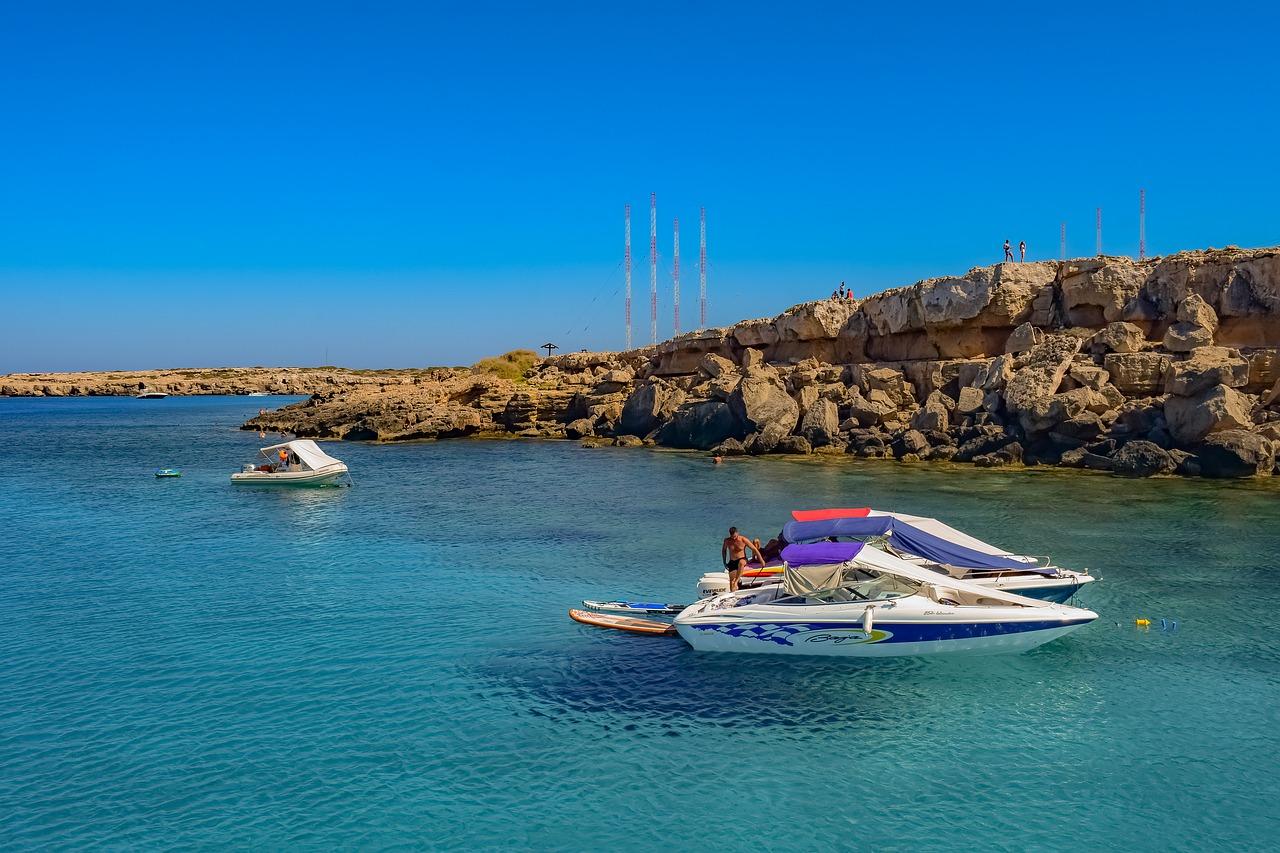 It can be reached by foot, quad bike or boat and is one of the wonders of Cyprus, especially popular with snorkellers.
The name of the beach is due to the different shades of blue that the sea takes on, with its extremely clear waters. The beach is part of the Akamas Park, a magnificent natural setting that must feature on any itinerary to discover the island's most beautiful beaches.
Where is it located: west of Akamas, in the Pafos area, from here it can be reached by car via the main road B6, from Nicosia follow the A1 southwards, take the A6 to Limassol and then continue on the B6 to Pafos - Get directions
Ideal for: relaxation
Type: golden sand/rock/pebbles
8 - Lara Beach, Pafos
 Photo by somiz. This beach is also rather difficult to reach, but well worth the effort. The bay is divided into two parts, south and north, with the latter being the best known and largest. This part of the beach is chosen by the Caretta caretta turtles to deposit their delicate and important eggs. If you choose to visit it, be very careful: if you see cages in some parts of the beach, do not touch them and especially do not move them, these are tools for protecting the turtles' eggs.
Location: in the Pafos area, reached by car via the E701 - Get directions
Ideal for: relaxation/nature
Type: golden sand
9 - Fig Tree Bay, Protaras
 Fig Tree Bay is located along the east coast of Cyprus, near Protaras. The beach is sandy, easy to reach and bordered by some rocks.
It is a popular area of coastline for water sports enthusiasts, among which snorkelling stands out, but there is no shortage of facilities and equipment to practice other disciplines as well. The area is also well served by bars, restaurants and shops.
Location: West coast, in the Protaras area. It can be reached by car from Nicosia via the A3 towards Cape Greco - Get directions
Ideal for: snorkelling/water sports
Type: golden sand
10 - Golden Beach, Dipkarpaz
 Photo by Ghazal Arfaei. Suitable for those who do not like mass tourism and crowds of people, this beach is located in the Turkish part of the island. Nature in this area has remained wild and solitary.
The beach has fine, very white sand, is about 10 km long and needless to say, the sea is blue and crystal clear. Protecting the beach is thick vegetation, consisting mainly of typical Mediterranean flora, with junipers and mastic trees. It is the perfect destination for those who love the utmost tranquillity, to be sought in the midst of nature.
Where it is located: Northern Cyprus, Turkish part of the island, in the Dipkarpaz area. Getting there is a bit tricky, as it is in a remote part of Cyprus, so we recommend arriving in Agia Napa and heading north via the A3 to Dörtyol, then following the signs to Geçitkale, finally heading to Dipkarpaz - Get directions
Ideal for: relaxation/nature
Type: white sand
What to see in 3 days
Cyprus is quite a big island, so clearly in just 3 days you have to make some sacrifices, but it is still enough time to enjoy both the seaside and cultural aspects.
Here are some tips on how to spread out the various attractions and activities with 3 days to spare:
Day 1 (Nicosia): Cyprus Archaeological Museum, Shacolas Tower Museum and Observatory, Byzantine Museum of Cyprus, Buyuk Han, Selimiye Mosque
Day2: Aphrodite Beach, Lara Beach
Day 3: Famagusta (old town, Lala Mustafa Pasha cami Mosque, Othello Castle ruins), Agya Napa (Pantachou Beach and Love Bridge)
What to see in 7 days
One week is enough time to dive into the Cypriot reality and discover both faces, without missing out on time on the beaches.
Here is the recommended 7-day itinerary:
Day 1 (Nicosia): private tour with a local person
Day 2: Byzantine Museum of Cyprus, Turkish Nicosia, Buyuk Han, Selimiye Mosque
Day 3: St Herakleidios Monastery, Agios Nikolaos tis Stegis, St John Lampadistis Monastery, Kykkos Monastery
Day 4: Famagusta (old town, Lala Mustafa Pasha cami Mosque, Othello Castle ruins), Agya Napa (Pantachou Beach and Love Bridge)
Day 5 (Paphos): Tombs of the Kings, Paphos Archaeological Park, Vrisoudia ΙΙ Beach and SODAP Beach, Coastal Broadwalk
Day6 (Kourion and Limassol): Kourion Archaeological Park, Akti Olympion B beach, welcome tour of Limassol with a local
Day 7: Kyrenia (old town and castle), Alagadi Turtle Beach
Plan your stay in Cyprus: tips, flights and hotels
Trip type | Sleep | Eating | Transport | Attractions | Total cost per week | Average cost per day |
|---|---|---|---|---|---|---|
Low cost | €175,00 | €150,00 | €100,00 | €30,00 | €455,00 | €65,00 |
Medium | €350,00 | €280,00 | €100,00 | €30,00 | €760,00 | €108,00 |
Luxury | €490,00 | 420,00 | €100,00 | €30,00 | €1.040,00 | €148,00 |
NB: The prices in the table above are per person.
Cyprus is not an expensive island, so it is perfect for those who want to plan a low-cost holiday. In addition, there are numerous air connections from Italy, especially during the summer season.
As far as accommodation is concerned, you will be spoilt for choice between hotels, B&Bs and flats. If you want autonomy and cheap accommodation, we recommend you choose a flat.
Lastly, eating out will also cost money, on average you will spend between €10.00 and €20.00 depending on the establishment you choose. If you choose quick lunches, the prices go even lower.
Despite the division and tensions that have occurred in the past between the Greek and Turkish governments, the island is safe and, to cross the green line that divides the Greek and Turkish parts, all you need is a valid passport
Before you go: useful tips
When to visit Cyprus: if your holiday involves only sun and beach, then choose the period between June and mid-October, alternatively spring or autumn may be fine.
How to get there: the airport is 40 kilometres from the capital Nicosia, which you can reach by Kapnos airport shuttle bus (50 minutes, €8.00 each way) or by taxi (30 minutes, average cost €40.00)
Where to sleep: the best option is Nicosia. If you are mainly interested in the sea, we recommend seaside resorts such as Larnaca and Pafo. If, on the other hand, you are mainly looking for nightlife and entertainment, the right city is Agia Napa
Gettingaround: for internal travel there are no trains, the best solution is to rent a car directly at the airport, the prices are very cheap and you will only need an Italian driving licence. Be careful though: driving is on the left
An island divided in two: Cyprus is divided into two parts, a Greek part and a Turkish part. Nicosia is the only capital in the world divided in two. Along the city runs the Green Line established by the UN to divide this country. You can safely cross this line, you just have to pass a few checks, just make sure you have your papers and passport. And when you rent a car, make sure you have permission to cross into Turkish Cyprus as well, just ask at the rental desk at the airport. There are no dangerous situations, of course some caution and a responsible attitude is always required, especially in Northern Cyprus, the Turkish part. Before leaving and during your trip, keep up to date on the official website of the Farnesina section Cyprus