Fuerteventura is the second largest of theCanary Islands archipelago after Tenerife, and is the closest to the African coast.
The island, known as isla lenta, is the oldest in the archipelago and is suitable for those who prefer a slow pace, unspoilt nature and dreamy beaches.
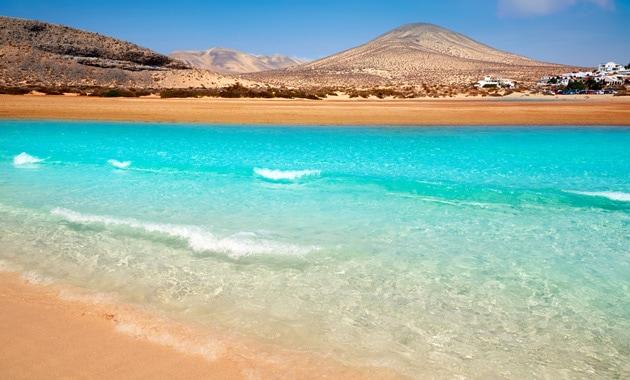
Fuerteventura offers many natural and cultural attractions, from enchanting white beaches with clear turquoise waters to sports. Together with Lanzarote, it is the driest island in the Canaries.
In 2009, it was declared a Biosphere Nature Reserve. We have compiled a guide on why you absolutely must visit Fuerteventura with things to see, beaches, climate and weather.
Fuerteventura
Fuerteventura is an island to be enjoyed slowly.
It is only 97 kilometres from the African coast and is characterised by temperatures between 18 °C and above 24 °C all year round. Along the coast you will find more than 150 fine sandy beaches, surfing paradises and secluded beaches. Fuerteventura is an arid island.
Water is scarce and yet walking around it does not feel like crossing a desert land. The red and green of aloe plantations cover the slopes of dormant volcanoes. The bicycle is one of the best ways to discover the interior of the island, riding along the many dark paths that criss-cross Fuerteventura.
There are no monuments in Fuerteventura. The villages to visit are not as many as in Tenerife or Gran Canaria, but they are there. Visit Betancuria and Lajares.
On the Jandìa peninsula there is one of the few signs of the island's colonial past, imprinted in the façades of Villa Winter, a villa that belonged to a general close to Franco and the Nazis (You can find all the info on the climate in Fuerteventura here).
What is there to see on the island? Here is a selection of attractions
Island of Lobos 
The island of Lobos is an uninhabited islet near Fuerteventura. It can be reached by ferry from Corralejo.
In the past it was inhabited by sea lions. Fishermen, however, devoted themselves to killing these animals, which they considered harmful to fishing. Today, attempts are being made to reintroduce them with great difficulty and opposition from the fishermen.
To the island of Lobos one goes to the sea on deserted beaches where there are only boathouses used by fishermen and few bathers.
Sagrada Tindaya Mountain 
Tindaya Mountain stands out alone in the desert landscape of Fuerteventura. The aborigines considered it a sacred and magical place. Along the path up to the summit there are still their engravings.
Viewpoint of Sicasumbre 
In the south of Fuerteventura, at Pajara, there is one of the belvederes attracted to stargazing. There are stands to fix telescopes and cameras and information panels on the constellations.
Belvedere of Morro Velosa 
The Belvedere Morro Velosa is located on the road to the ancient capital Betancuria. From here one can admire the island's hinterland in a seemingly endless succession of ochre-coloured hills and canyons.
Natural pools of Aguas Verdes 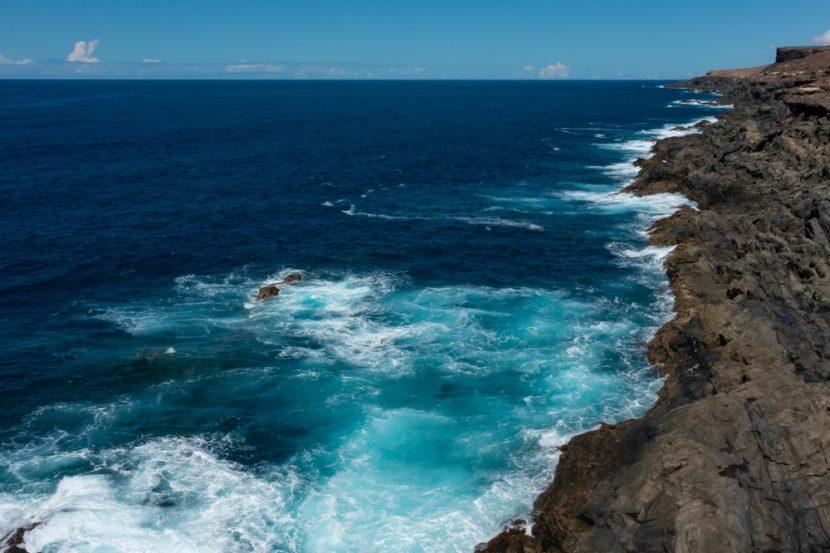
In Betancuria there are 6 km of natural pools, pools and creeks where the water is calm and warm. Fuerteventura's natural pools are isolated, uncrowded and perfect for those who enjoy relaxation and solitude.
Parque Natural de Corralejo 
North of Fuerteventura is a huge nature park in which volcanic rock formations are covered by a high, soft layer of white sand and dunes.
The dunes continue as far as the eye can see until they lap beaches with turquoise water. Here you will find information on visiting the Corralejo Park.
Betancuria 
Betancuria is a small village in the interior heights of Fuerteventura. It is a small town that was once the capital of the island. The town was founded in the early 15th century by a Norman knight and was soon populated with churches and chapels.
Beaches of Fuerteventura 
The jewel in the crown of Fuerteventura are the beaches.
There are all kinds and for all tastes. The black beaches, a reminder of the island's volcanic origin, are made up of dark grains that contrast with the blue ocean, as in the case of the bay of Ajuy, one of our favourites.
Surfers in particular are spoilt for choice. In Fuerteventura the trade winds blow all summer long, while in winter the Atlantic waves provide optimal surfing conditions.
In the north are the beaches favoured by surfers while in the south the kite sails go crazy. Here you can find all the most beautiful beaches in the Canaries and below is a list of the most beautiful beaches to discover in Fuerteventura.
Playas de Jandia
Jandia is located near a famous beach, Sotavento. The peninsula is known for its surfing competitions, but also for its fine sand and transparent water.

Playa de Cofete
In Morro del Jable, Cofete Beach has a warmer sea than other places and the mountains shelter it, in part, from the winds.
La Concha
In El Cotillo, the most beautiful beach is La Concha. The horseshoe-shaped rocks guarantee calm waters and, should the wind pick up, there are corralitos, circular walls of volcanic stone built by the locals to create shelters.
SEE ALSO: WHAT TO SEE IN GRAN CANARIA
Nightlife
Fuerteventura is affectionately called the Slow Isla. Time seems to run even less fast here than on the other islands. There is a healthy life, lots of sport and little nightlife. This does not mean, however, that there are no places to have fun.
Most of Fuerteventura's clubs are in Corralejo, which is a small but lively town. The bars are many. The Banana Bar, in particular, is frequented by surfers and famous for its cheap beers (from 1.50). It is located on the terrace of a waterfront building. To find it, just look at the images projected on the building opposite.
Climate and weather: when to go
There is no such thing as winter in Fuerteventura. The average annual temperatures are around 20°. In summer they never exceed 30° and in full winter (January and February) they do not fall below 20°.
Swimming in the sea can be done throughout the year as long as you find areas and times sheltered from the wind.
The best thing to do in Fuerteventura's weather is to dress in layers throughout the year: a jacket for the wind, a heavy sweatshirt, short sleeves, shorts and a swimming costume. You can find all the information about the climate in the Canaries here.
Advice and opinions
The beaches with calm sea in Fuerteventura are located along the east coast, the one facing Morocco, from El Cottilo to Morro Jable. La Concha in particular has almost always calm sea and offers shelter from the wind.
In Lagos there are small lakes and sheltered natural pools. It is advisable to choose beaches with little wind and calm sea, especially in winter, when temperatures are lower. In summer, too, if you want to swim and if you do not practise water sports.
To visit the belvederes and stargaze, as well as to climb the mountain, it is essential to cover yourself well, because even in summer it can get cool (in addition to a windbreaker jacket, take a heavy sweater with you).
Map
What to do in Fuerteventura one week?
In one week you must see the Sagrada Tindaya Mountain, Isla de Lobos, the Morro Velosa viewpoint, the Parque Natural de Corralejo, the village of Betancuria, Playas de Jandia, La Concha, El Cotillo
What language is spoken in Fuerteventura?
Spanish is spoken in Fuerteventura
How many airports are there in Fuerteventura?
There is one airport in Fuerteventura, which is located near the town of Puerto del Rosario.
Where is the best place to stay in Fuerteventura?
One of the best areas to stay in Fuerteventura is Corralejo.
Where is Fuerteventura?
Fuerteventura is an island in the Canary Islands archipelago.
How big is Fuerteventura?
Fuerteventura is 100km big.
Spain